

A peer-to-peer (P2P) review is an informal clinical discussion offered under some payer, plan, or utilization-management processes before or alongside a formal appeal. Follow the denial notice and current plan or program instructions for the request window and eligible participant. The clinical argument should come from a plan-authorized treating or ordering clinician; depending on the plan, that may be a physician, nurse practitioner, or physician assistant. Billing staff can schedule and document the call but should not make the clinical argument.
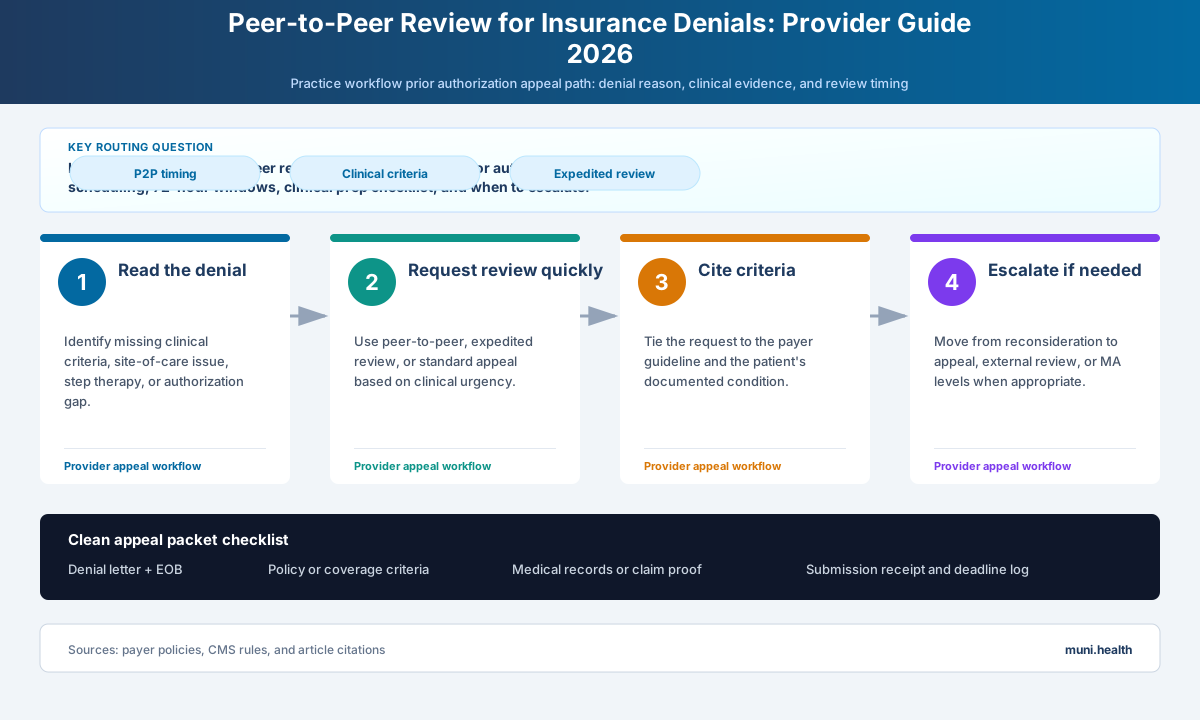
What a Peer-to-Peer Review Is and Why It Matters
A peer-to-peer review lets a plan-authorized treating or ordering clinician discuss the case with the payer's clinical reviewer. It is separate from the formal written appeal process and may help clarify the reason for a prior authorization denial or identify documentation the payer says is missing.
Availability and procedure vary by payer, plan, service, state, and delegated reviewer. Follow the denial notice's formal appeal instructions and deadline even while requesting a P2P; never assume the informal discussion pauses, restarts, or replaces the appeal.
According to the AMA's 2024 Prior Authorization Physician Survey (n=1,000 physicians — 400 primary care, 600 specialists), 65% of physicians regularly participate in peer-to-peer reviews with insurers. A 2023 prospective study published in the journal Orthopedics (PMID 37921528) found that nearly all peer-to-peer reviews for CT and MRI prior authorization denials in orthopedic practices resulted in approval — a striking overturn rate for a pre-appeal mechanism.
CMS-0057-F Requires a Specific Reason, Not Necessarily the Exact Criterion
For non-drug prior authorization requests, CMS-0057-F requires impacted payers to provide a specific denial reason: Medicare Advantage organizations and state Medicaid and CHIP fee-for-service programs beginning January 1, 2026; Medicaid and CHIP managed care beginning with rating periods on or after that date; and QHP issuers on Federally-facilitated Exchanges for plan years beginning on or after that date. The reason may identify a failed clinical criterion, but the rule does not guarantee that level of detail. Quote a criterion only when the notice supplies one.
When to Request a Peer-to-Peer Review
Review the denial notice promptly and follow the current plan or program instructions if a P2P is available. Treat the P2P and formal appeal as separate tracks: calendar the formal appeal deadline and do not assume a P2P request pauses or restarts it.
P2P is highest value for:
- Medical necessity denials where the chart narrative wasn't included in the original PA submission — including a post-payment CO-50 denial, where P2P works the same way but runs alongside a formal claim appeal instead of a PA reconsideration
- Imaging denials (CT, MRI, PET) where clinical urgency wasn't documented
- Specialty procedure denials where the payer's reviewer likely lacks relevant specialty expertise
- Step therapy denials where the patient has already tried (or cannot safely try) the required first-line treatment — including BCG and advanced prostate-cancer agent PA denials and anti-VEGF step-therapy exceptions for Eylea and Vabysmo, where the fastest fix is often walking a reviewer through the risk-tier or prior-therapy documentation directly
P2P has lower return on investment for:
- Administrative denials (wrong NPI type, missing modifiers) — these are better handled as corrected claims
- Coverage exclusions that are plan-benefit limitations, not medical necessity decisions
- Timely filing denials — those require documentation of extenuating circumstances, not clinical argument
For a full breakdown of which denial type calls for which response, see the prior authorization denial complete guide. For the complete 5-step escalation sequence — where P2P fits, when to escalate to formal appeal, and how IRO and ALJ follow — see what happens if prior authorization is denied 2026. For exact call phrasing — the scheduling-call script and the plan-authorized clinician's four-part clinical argument — see our peer-to-peer review call script.
Prepare this appeal packet with your team.
Draft the appeal, coordinate missing documents, and approve the reviewed packet. Keep your clearinghouse; your practice checks deadlines and submits through the payer’s accepted channel.
First 3 appeals free, then $20 per appeal. Start with your denial letter or EOB and available records. No meeting or clearinghouse connection required.
Payer-Specific P2P Request Processes
Scheduling, eligibility, request windows, and routing can vary within the same insurer by plan, service, state, and delegated program. Use the denial notice and current plan or program instructions; the routing examples below are starting points to verify for the specific case.
| Insurer | Request Window | How to Verify Routing | Clinical Participant | Notes |
|---|---|---|---|---|
| UnitedHealthcare | Use the denial notice and current program instructions | Confirm the issuer; current UHC materials may route through providerforms.uhc.com/PeertoPeerRequestForm.html or the provider portal, while EviCore-issued cases use its clinical-consultation route | Treating or ordering clinician authorized for the case | Delegated programs may use a separate route; verify before requesting |
| Aetna | Use the denial notice and current plan instructions | Call the provider number on the denial notice; some accounts may offer a NaviNet route | Treating or ordering clinician authorized for the case | Aetna Better Health procedures are state-plan specific |
| BCBS (varies by affiliate) | Use the denial notice and current affiliate instructions | Call the provider number on the denial notice; some affiliates have a dedicated scheduling route | Treating or ordering clinician authorized for the case | Verify the responsible plan and routing for the member |
| Cigna | Use the denial notice and current program instructions | Confirm whether Cigna or EviCore handles the case; EviCore-issued cases may route through evicore.com/provider/request-a-clinical-consultation | Treating or ordering clinician authorized for the case | Delegated and non-delegated services may use different routes |
| Humana | Use the denial notice and current plan instructions | Verify whether the current route is Availity Essentials or the provider-services contact named in the notice | Treating or ordering clinician authorized for the case | Track the separate formal appeal deadline while requesting P2P |
Separate Administrative and Clinical Roles
Follow the plan's current instructions for who may request or participate. Billing staff can contact the payer to verify routing, request scheduling when permitted, and document the response. The clinical argument should come from a plan-authorized treating or ordering clinician, which may be a physician, nurse practitioner, or physician assistant depending on the plan and service.
How to Schedule a UHC Peer-to-Peer
Scheduling a UHC P2P through the correct channel depends on who issued the denial.
If UHC clinical staff issued the denial directly: Follow the current scheduling path named in the denial notice or provider portal; current materials may route through providerforms.uhc.com/PeertoPeerRequestForm.html. Have the denial reference number, member ID, CPT code, and the plan-authorized clinician's callback details ready.
If EviCore issued the denial (imaging, cardiology, MSK, selected specialties): Follow the current EviCore instructions identified for that case; current materials may route through evicore.com/provider/request-a-clinical-consultation. Confirm clinician eligibility and timing before scheduling.
For additional UHC prior auth denial appeal steps, see how to appeal a UHC prior auth denial.
How to Schedule an Aetna Peer-to-Peer
Call the Aetna provider number printed on the denial letter and request the current peer-to-peer instructions for the specific authorization reference number. Have the plan-authorized clinician's callback details ready.
For Aetna Medicaid plans (Aetna Better Health), the P2P process is managed at the state level. Contact the specific state plan's provider services line rather than the commercial Aetna number.
How to Schedule a Cigna Peer-to-Peer
EviCore-delegated services (most imaging, MSK, cardiovascular): Log in to evicore.com/provider/request-a-clinical-consultation. Enter the case number from the Cigna denial letter to confirm the case is EviCore-delegated before scheduling.
Non-delegated services: Call Cigna Provider Services and confirm the current scheduling procedure and eligible clinical participant for the case.
If you're unsure which track applies, call Cigna Provider Services first — they can confirm delegation status for the specific CPT code and plan type.
For Cigna-specific prior auth context, see Cigna PromptPA and portal guide 2026.
Clinical Preparation Checklist
Prepare the plan-authorized clinician to address the stated denial reason with the relevant record:
Required for every P2P:
- The denial notice — identify the specific reason and any clinical criterion actually supplied
- Patient's chart notes from the relevant visit(s), including documented symptom severity and timeline
- Any imaging, lab results, or prior treatment records that weren't submitted with the PA
- The treating or ordering clinician's assessment of why the service is clinically appropriate
For medical necessity denials:
- The insurer's Clinical Policy Bulletin (CPB) or Coverage Determination Guideline (CDG) for the service — download it from the insurer's website before the call
- Relevant clinical society guidelines (AHA, AAOS, ACS, AAD, ACOG, etc.) that support the treatment decision
- Published peer-reviewed studies if the insurer's criteria cite specific evidence thresholds
For step therapy / prior therapy denials:
- Dates, doses, duration, and clinical outcomes for every first-line treatment already attempted
- Documentation of why any skipped step-therapy drugs are contraindicated (allergy, adverse reaction, drug interaction, clinical exclusion)
- For an impacted non-drug request, the specific denial reason required by CMS-0057-F; quote a clinical criterion only if the notice supplies one
For imaging denials (CT, MRI, PET):
- Documented clinical indications — symptoms, duration, examination findings, functional limitations
- Why the imaging is necessary to change clinical management (not just diagnostic curiosity)
- Any failed conservative treatment that preceded the imaging request
What Makes a P2P Succeed
Use a simple structure: restate the specific denial reason and any criterion actually supplied, connect the relevant chart facts to the request, cite an applicable clinical guideline when useful, and ask what decision or additional documentation follows. Keep the discussion grounded in the notice and current policy rather than guessing at an unstated criterion.
What to Expect on the Call
The payer's reviewer will confirm member and authorization details, then ask the plan-authorized clinician to explain the clinical rationale. Confirm the expected format and timing while scheduling rather than relying on a default.
The AMA's concern about reviewer qualifications is legitimate. The AMA's 2024 Prior Authorization Survey found that only 16% of physicians report the health plan's reviewer often or always has the appropriate specialty qualifications. STAT News (November 2025) reported that physicians routinely speak to reviewers from different specialties entirely. If the reviewer on the call clearly lacks specialty expertise for a complex clinical case, note that on the call — it becomes relevant if you need to escalate.
After the call, document the result and the determination timing stated for that case:
- Approved: PA is granted, often retroactively to the original request date
- Upheld denial: Request written confirmation and continue following the formal appeal instructions and deadline; do not infer that deadline from the P2P result
If the denial is upheld at P2P, continue or initiate the separate written appeal under the denial notice's instructions. Request a written summary of the P2P outcome, including the medical reviewer's stated rationale, for the appeal record. For structured letter templates and payer-specific criteria citations for the written appeal, see the medical necessity justification letter guide 2026.
When Peer-to-Peer Alone Is Not Enough
P2P is an informal option, not a substitute for the formal appeal. Follow the denial notice to preserve each available review right and deadline.
Use the formal written appeal when:
- The P2P medical reviewer lacks specialty expertise and upholds the denial on criteria the treating or ordering clinician disputes
- The denial is based on a plan benefit limitation, not medical necessity — P2P has no jurisdiction over coverage exclusions
- The urgency is time-sensitive: request an expedited appeal simultaneously with the P2P to preserve your timeline
Beyond internal appeals:
- External/Independent Review: All fully-insured commercial plans in most states, ACA plans, and all Medicare and Medicaid plans have mandatory external review rights. For MA plans, external review escalates to the federal IRE (C2C Innovative Solutions as of May 1, 2026, previously Maximus Federal Services). For state-regulated commercial plans, external review goes to a state-certified Independent Review Organization. See the independent review organization guide for detail.
- State insurance commissioner: For state-regulated commercial plans; no jurisdiction over ERISA-governed employer self-funded plans or Medicare/Medicaid plans
- ERISA internal appeal → federal court: For self-funded employer plans, the appeal track ends internally, and federal court is the only external option
How Muni Appeals Supports the P2P Process
The clinical P2P discussion belongs to the plan-authorized treating or ordering clinician — no software replaces that conversation. The preparation, scheduling, and documentation work around it can be organized systematically.
Muni Appeals helps billing teams:
- Pull the relevant insurer clinical policy bulletin for the service before the call
- Compile the patient's prior treatment history and supporting chart documentation
- Provide fields for staff to record the peer-to-peer outcome and decide whether to begin a written appeal
- Surface deadline risk while staff schedules peer-to-peer review and calendars the appeal window
Frequently Asked Questions
Can billing staff request a peer-to-peer review for the clinician?
It depends on the current plan or program instructions. Billing staff may be able to verify routing and request scheduling, and they can gather denial details, CPT codes, and callback information. They should not make the clinical argument. That discussion belongs to a plan-authorized treating or ordering clinician, which may be a physician, nurse practitioner, or physician assistant.
What happens if I miss the peer-to-peer request window?
Follow the denial notice and current plan instructions. A missed P2P request window may remove that informal option, but it does not by itself define the separate formal appeal rights or deadline. Calendar and follow the formal appeal instructions without waiting for the P2P outcome.
Is peer-to-peer review available for Medicare Advantage denials?
Check the Medicare Advantage plan's current denial notice and utilization-management instructions to determine whether and how a P2P is available. For non-drug prior authorization denials, CMS-0057-F requires Medicare Advantage organizations to provide a specific reason beginning January 1, 2026; it does not guarantee that the notice quotes the exact clinical criterion. Keep any informal P2P separate from the formal Medicare appeal instructions and deadline.
Does requesting a P2P restart the appeal clock?
Never assume that it restarts or pauses the formal appeal deadline. Follow the denial notice and current plan instructions, document the P2P request date, and track the formal appeal deadline in parallel unless the plan confirms a different treatment in writing.
How do I know if my Cigna denial went through EviCore or Cigna directly?
The denial letter will identify EviCore by name if EviCore issued the denial. If the denial letter comes from Cigna's internal clinical team with a Cigna case number (no EviCore reference), the denial is non-delegated. When in doubt, call Cigna Provider Services and give them the authorization reference number — they can confirm delegation status for the specific service.
What success rate can I expect from a peer-to-peer review?
Reversal rates vary significantly by service type and payer. A 2023 prospective study in Orthopedics (PMID 37921528) found nearly universal P2P reversal for CT/MRI denials in orthopedic practice. Denials that relied on incomplete initial submission information — rather than a fundamental plan coverage limitation — are the strongest P2P candidates and show the highest reversal rates.
What should the clinician say if the reviewer doesn't have appropriate specialty expertise?
State it directly and calmly on the call: "I'd like to note that the clinical question here involves [specialty context], and I want to confirm the reviewer's relevant training and experience." Document the response and any escalation request. That record can inform the separate formal appeal, but a specialty mismatch during an informal P2P does not by itself establish procedural grounds or a violation.
When should I skip P2P and go straight to formal appeal?
P2P may not fit when the denial is a plan benefit exclusion rather than a medical-necessity issue, when the plan does not offer it for the case, or when following the P2P route would put a formal or expedited appeal deadline at risk. Use the denial notice and current plan instructions to choose the available path; do not delay a time-sensitive formal appeal while waiting for an informal review.
Ready to Handle the Next Denial Faster?
Respond to a prior authorization denial systematically and on the case-specific timeline. A P2P may be one informal option; the formal appeal remains a separate track governed by the denial notice.
Get Started:
- P2P preparation package compiled from the patient chart and insurer policy bulletin
- Appeal tracking kept separate from the informal P2P outcome
- Deadline monitoring so appeal windows don't lapse during scheduling
- Multi-payer workflow for practices dealing with UHC, Aetna, BCBS, Cigna, and Humana in the same week
This guide reflects the 2026 payer sources reviewed for publication. P2P processes, request windows, and delegation arrangements change. Verify current scheduling instructions, state requirements, and plan terms before requesting a P2P.