

Aetna is a mixed payer for independent practices in 2026. Commercial HMO reimbursement averages 216% of Medicare — above most competitors — but Aetna's Medicare Advantage prior authorization denial rate of 11.6% is the third highest among major MA insurers, behind UnitedHealthcare and Centene. When you appeal, 92.6% of MA denials get overturned. The work is worth it; the volume is frustrating.
What Independent Practices Are Actually Saying About Aetna
Aetna is above average for commercial reimbursement and a high-maintenance payer on Medicare Advantage — third-highest MA prior authorization denial rate among major insurers, but an unusually high 92.6% appeal overturn rate that rewards practices with a systematic appeals workflow.
Aetna is the third-largest commercial insurer by membership in the U.S., covering approximately 26 million people across commercial group, Medicare Advantage, and (until January 2026) ACA Exchange plans. For most practices, Aetna is unavoidable — which makes understanding its actual performance as a payer more important than reading generalized reviews.
This guide is built from CMS data, KFF analysis, AMA survey results, and Senate investigative records. The goal is to give you a provider-side picture: what Aetna pays, how often it denies, and whether appealing is worth your staff's time.
The short answer: Aetna's commercial reimbursement is generally favorable. Its Medicare Advantage product is a different story — high denial rates, new inpatient payment policies that undercut hospital revenue, and a pattern of network contract disputes that have shaken provider trust in several states.
Aetna Denial Rates by Plan Type
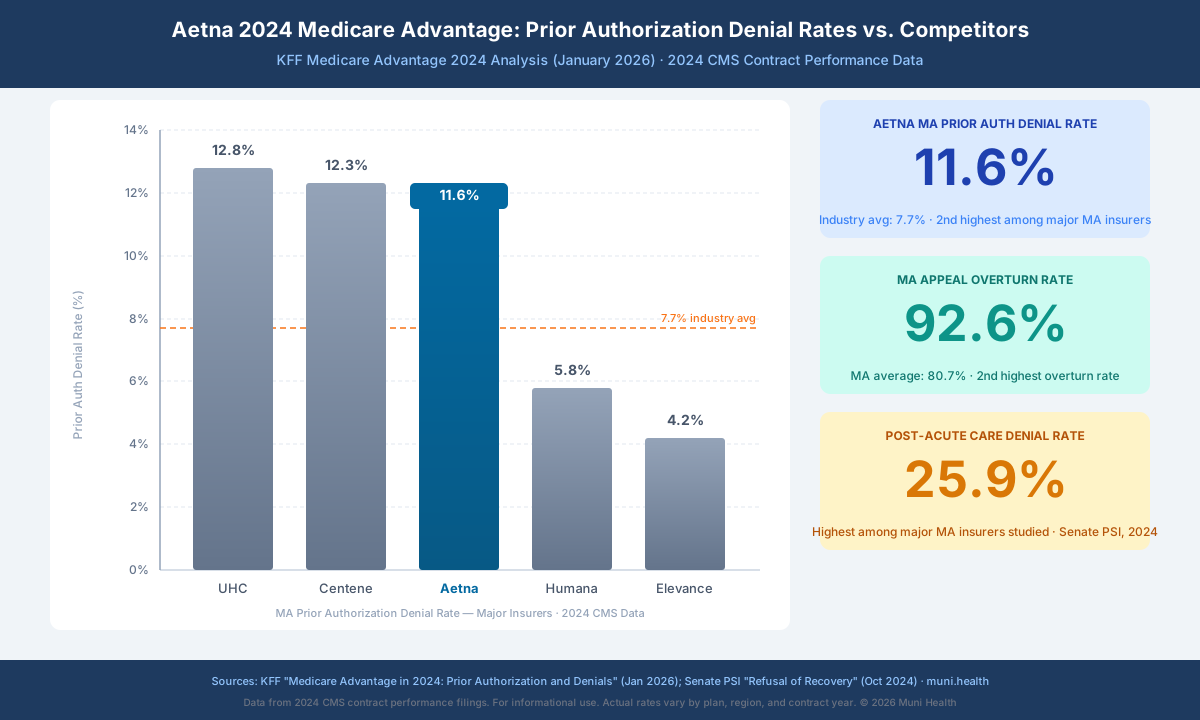
Aetna's Medicare Advantage prior authorization denial rate of 11.6% is the third highest among major MA insurers — roughly 1.5× the 7.7% industry average, per KFF's analysis of 2024 CMS Medicare Advantage prior-authorization data — and its post-acute care (PAC) denial rate of 25.9% is the highest among the three insurers studied in the Senate PSI's October 2024 report.
Prepare this appeal packet with your team.
Draft the appeal, coordinate missing documents, and approve the reviewed packet. Keep your clearinghouse; your practice checks deadlines and submits through the payer’s accepted channel.
First 3 appeals free, then $20 per appeal. Start with your denial letter or EOB and available records. No meeting or clearinghouse connection required.
Aetna's denial behavior varies significantly depending on which product line your patient is on.
| Plan Type | Denial Rate | Benchmark | Source |
|---|---|---|---|
| Medicare Advantage (PA) | 11.6% | 7.7% industry avg | KFF, January 2026 (2024 CMS data) |
| Medicare Advantage (PAC) | 25.9% | Highest among 3 studied | Senate PSI Report, October 2024 |
| ACA Exchange (in-network claims) | 21.6% | 19.0% national avg | KFF, 2024 CMS data (parent-company plans) |
The Medicare Advantage prior authorization denial rate of 11.6% in 2024 makes Aetna the third-highest major MA insurer, trailing only UnitedHealthcare (12.8%) and Centene (12.3%). For context, Humana's MA denial rate was 5.8% and Elevance's was 4.2% that same year.
For post-acute care specifically, the Senate Permanent Subcommittee on Investigations' "Refusal of Recovery: How Medicare Advantage Insurers Have Denied Patients Access to Post-Acute Care" (October 17, 2024) examined CVS/Aetna, UnitedHealthcare, and Humana. CVS/Aetna's denial rate for PAC prior authorizations was 25.9% — the highest among the three — while the volume of Aetna PAC prior auth requests grew 57.5% during the study period.
ACA Exchange Exit: January 1, 2026
Aetna exited all ACA Exchange markets effective January 1, 2026, affecting approximately 1 million members across 17 states. If your practice had meaningful Aetna Exchange volume, expect panel attrition as those patients move to new carriers. This does not affect Aetna commercial group or Medicare Advantage products.
For more context on how Aetna compares to other major payers, see our insurance denial rate comparison guide.
Aetna Reimbursement Rates
Aetna's commercial HMO institutional rates average 216% of Medicare — above most commercial peers and well above the rates it offered on ACA Exchange plans before its January 2026 exit. Medicare Advantage rates are individually negotiated and face mounting pressure from active network contract disputes in multiple states.
Aetna does not publish a uniform fee schedule. All rates are negotiated individually, but Serif Health's analysis of CMS Transparency in Coverage machine-readable files (2025) provides meaningful benchmarks:
| Product Line | Institutional Rate | Professional Rate | Trend |
|---|---|---|---|
| Commercial HMO (group) | 216% of Medicare | Not separately reported | Stable to modest growth |
| ACA Exchange (pre-exit) | 133% of Medicare | 122% of Medicare | N/A — product discontinued |
| Medicare Advantage | Negotiated per facility | Varies by specialty | Under pressure from denial disputes |
The commercial HMO figure — 216% of Medicare — is well above what most exchange-market peers offer. If your practice is primarily contract-based commercial, Aetna's rates are generally competitive. The rate disparity between commercial and exchange products was, in fact, a cited factor in Aetna's decision to exit exchanges: Aetna was paying 20%+ more to providers than Exchange peers while collecting similar premiums, creating structural losses.
What this means for contract negotiations: Aetna's commercial rate floor is meaningfully above Medicare, which is useful leverage in renegotiation conversations. The challenge is that Aetna applies utilization management aggressively on MA, which can recapture some of that revenue through denials and payment adjustments.
Aetna Prior Authorization Burden in 2026
Aetna ranks in the upper-middle of major payers for prior authorization burden — more intensive than Cigna or Blue Cross Blue Shield plans on average, but behind UnitedHealthcare and Humana.
According to the AMA's 2024 Prior Authorization Physician Survey (1,000 physicians surveyed in late 2024), physicians on average spend 13 hours per physician per week handling prior authorization across all insurers, with an average of 39 PA requests per physician per week. Forty percent of practices report having staff working exclusively on prior authorizations.
In the AMA's 2025 Prior Authorization Physician Survey — a separate, later survey than the hours-and-volume figures above — 61% of physicians rated Aetna's PA burden "high" or "extremely high," behind UnitedHealthcare (75%) and Humana (65%), roughly tied with Elevance/Anthem (61%), and ahead of Cigna (59%) and Blue Cross Blue Shield (56%).
In November 2025, Aetna announced a PA bundling initiative covering IVF, musculoskeletal procedures (knee replacement, related X-rays, DME), and cancer care (lung, breast, prostate). Instead of requiring separate pharmacy and medical PA approvals, a single combined request now covers both. This reduces some back-and-forth for high-volume procedure types, though overall PA volume remains high.
Aetna's 2026 Policy Changes Affecting Providers
Two Aetna policy changes materially affect provider revenue in 2026: the Level of Severity inpatient payment policy (paying observation rates for certain short MA stays as of January 1, 2026) and the complete ACA Exchange exit effective the same date.
Level of Severity Inpatient Payment Policy
The most consequential Aetna policy change for hospital-based providers in 2026 is the Level of Severity inpatient payment policy, effective January 1, 2026 (originally scheduled November 15, 2025 but delayed after AHA intervention).
This applies to Aetna Medicare Advantage and dual-eligible plans only. For urgent and emergent inpatient admissions lasting more than 1 midnight but fewer than 5 midnights, Aetna will approve the admission but reimburse at observation (outpatient) rates if the stay does not satisfy Milliman Care Guidelines (MCG) inpatient criteria.
This is not a formal denial — it's a payment adjustment. The distinction matters because standard appeal pathways don't apply; disputes go to arbitration.
Observation rates are typically well below inpatient DRG rates for comparable stays. The AHA formally urged Aetna to rescind this policy in September 2025. Aetna delayed the effective date and issued additional guidance but kept the policy in place.
If Your Facility Treats Aetna MA Patients
Review your clinical documentation practices for 1-5 midnight stays under Aetna MA contracts. Meeting MCG inpatient criteria at the time of admission — and documenting it — is now necessary to receive inpatient-level reimbursement. Retrospective review of short stays that don't meet MCG criteria will trigger observation-rate adjustments without formal denial or standard appeal rights.
Network Contract Disputes
Aetna has been in active contract disputes with multiple large health systems heading into 2026:
- UConn Health (Connecticut, November 2025): Contract expired; UConn cited receiving "some of the lowest rates in Connecticut." Roughly 15,000 Aetna-insured patients lost in-network access.
- Community Medical Centers (California, January 2026): Terminated from Aetna MA network after failing to reach agreement before the December 31 deadline.
- UC Health (California, March 2026): Some locations stopped accepting Aetna MA PPO patients.
- Spartanburg Regional Healthcare (South Carolina): Negotiations were ongoing with an April 2026 termination deadline.
The recurring pattern across these disputes: Aetna reimbursement growth has not kept pace with cost inflation, and large systems have been willing to terminate rather than accept below-market rates.
For independent practices, direct contract leverage is limited. But these disputes signal that Aetna's MA reimbursement is under active pressure from providers at scale — which may support your own rate negotiation posture.
Aetna Appeal Success Rates
Aetna reverses 92.6% of Medicare Advantage prior authorization denials on appeal — one of the highest overturn rates among major MA insurers and well above the 80.7% MA-wide average. Appealing Aetna MA denials is more effective than almost any other major insurer.
This is where Aetna's data becomes genuinely useful for practices. KFF's "Medicare Advantage in 2024: Prior Authorization and Denials" (January 2026, based on 2024 CMS contract-level performance data) found:
- 92.6% of CVS/Aetna MA prior authorization appeals resulted in fully or partially favorable decisions — one of the highest overturn rates among major MA insurers
- Aetna's appeal rate was 19.9%, the highest among major MA insurers and well above the 11.5% industry average — meaning providers are appealing a higher share of Aetna denials than most
The 80.7% MA-wide overturn average is already high; Aetna's 92.6% overturn rate substantially exceeds it.
What this means in practice: Aetna denies more than average, but when providers push back through formal appeals, the denials are reversed at very high rates. The administrative cost of appealing is real, but the success rate is strong enough that a systematic appeal workflow pays off.
The Math on Aetna MA Appeals
If Aetna denies 11.6% of your MA prior authorization requests and 92.6% of appeals succeed, a consistent appeal process recovers the vast majority of initially denied revenue. The barrier is capacity — most independent practices lack the staff time to work every denial.
Aetna Appeal Deadlines and Decision Timelines by Plan Type
| Plan Type | Appeal Deadline | Decision Timeline | Next Level If Denied |
|---|---|---|---|
| MA Prior Authorization | 65 days from denial notice | 30 days standard / 72 hrs expedited | C2C Innovative Solutions reconsideration (as of May 1, 2026) |
| MA Claim (post-service) | 65 days from EOB | 60 days standard / 72 hrs expedited | QIO/C2C → ALJ → MAC |
| Commercial PA | 180 days from denial | 30 business days / 72 hrs urgent | External IRO or state DOI |
| Commercial Claim | 180 days from EOB | 45 days / 72 hrs urgent | External IRO or federal IDR |
How to Cite Aetna Clinical Policy Bulletins (CPBs) in an Appeal
Every Aetna denial letter cites the specific Clinical Policy Bulletin (CPB) that governed the clinical determination. The CPB version in effect on the date of service controls the criteria — Aetna revises CPBs quarterly, and submitting an appeal without citing the correct CPB number and version date is one of the most common reasons technically valid appeals receive a secondary administrative rejection before clinical review.
- Find the CPB number in the denial letter's "Clinical Criteria" or "Rationale" section (e.g., "Denied per Aetna CPB #0151").
- Retrieve the CPB: Aetna publishes its full CPB library on its provider portal and publicly at aetna.com. Download the version effective on the date of service — the effective date is listed in the CPB document header.
- Identify the specific criterion your patient meets: Locate the eligibility criteria section and find the criterion supported by your clinical documentation.
- Cite it in the appeal letter: "Per Aetna CPB #[XXX] (effective [date]), [service/diagnosis] meets criteria under [Section/Criterion], as documented by [specific evidence attached]."
This format — CPB number, version date, exact criterion — matches the structure Aetna MA appeal reviewers are trained to evaluate. Appeals that include it are significantly less likely to be returned on procedural grounds before a clinical reviewer reaches the substantive question.
For a complete Aetna appeal walkthrough, see How to Appeal Aetna Denials 2026 and the Aetna Medicare Advantage denial appeal guide. For denial-specific letter templates, see the Aetna appeal letter template and Aetna medical necessity letter. For denial rate context across all major insurers, see the Aetna denial rate statistics guide.
How to Work Aetna Effectively
The core operating principle with Aetna on Medicare Advantage: file every appeal, document inpatient admissions against MCG criteria at the time of admission, and cite the specific CPB that governed the denial as your primary reference. The data supports all three.
Prepare this appeal packet with your team.
Draft the appeal, coordinate missing documents, and approve the reviewed packet. Keep your clearinghouse; your practice checks deadlines and submits through the payer’s accepted channel.
First 3 appeals free, then $20 per appeal. Start with your denial letter or EOB and available records. No meeting or clearinghouse connection required.
Given the data above, a few operating principles for practices with significant Aetna volume:
Appeal everything. With a 92.6% MA overturn rate, letting denials stand is leaving revenue on the table. Build a workflow — even a basic tracker — that ensures every MA prior auth denial gets a first-level appeal filed within the deadline.
Document for inpatient criteria at admission. The new Level of Severity policy makes contemporaneous MCG-compliant documentation essential for 1-5 midnight stays. Retrospective documentation is harder to defend.
Watch your MA contract. The network dispute pattern suggests Aetna's MA reimbursement is under pressure. If your MA contract hasn't been renegotiated recently, the broader dispute pattern can support your leverage.
Prepare for Exchange panel attrition. If you were credentialed with Aetna Exchange plans, those patients need new carriers as of January 2026. Proactively communicate your network participation with their likely replacement carriers (Blue Cross, Cigna, Oscar, and regional plans vary by state).
How Muni Appeals Handles Aetna Denials
Aetna's published appeal data can make review worthwhile, but outcomes still depend on the plan, denial, and record. Muni Appeals prepares the research and draft for Aetna denials while staff verifies and submits the packet:
- Pulls denial reason codes and maps them to Aetna-specific appeal templates
- Generates appeals referencing Aetna Clinical Policy Bulletins and relevant MCG criteria
- Surfaces plan-type and deadline-risk context from the uploaded denial for staff verification
- Gives staff a review-ready packet and the fields needed to calendar and manage the appeal queue
Frequently Asked Questions
Is Aetna good insurance for providers in 2026?
Aetna is above average for commercial group reimbursement — Serif Health's analysis of CMS Transparency in Coverage data shows Aetna commercial HMO institutional rates averaging 216% of Medicare, which is competitive. Medicare Advantage is more complicated: Aetna has the third-highest MA prior authorization denial rate (11.6%) among major insurers, and a new 2026 inpatient payment policy that reduces reimbursement for short MA stays. The appeal success rate (92.6%) is strong, which offsets some of the denial volume if practices have a consistent appeal workflow.
How does Aetna's denial rate compare to other major insurers?
In Medicare Advantage (2024 CMS data, per KFF): Aetna is third worst at 11.6%, behind UnitedHealthcare (12.8%) and Centene (12.3%). Humana (5.8%) and Elevance (4.2%) are significantly lower. For ACA Exchange plans (2024 CMS data), Aetna's in-network claim denial rate was 21.6%, above the 19.0% national average. See the full insurance denial rate comparison for context across all major payers.
What is Aetna's appeal success rate for prior authorization denials?
For Medicare Advantage prior authorization denials in 2024, 92.6% of CVS/Aetna appeals resulted in fully or partially favorable decisions, per KFF's analysis of CMS data. This is substantially above the 80.7% MA-wide average. No equivalent public data exists for commercial plan appeal outcomes, as CMS does not require commercial insurers to report at the same granularity.
What is the new Aetna Level of Severity policy for 2026?
Effective January 1, 2026, Aetna now reimburses certain urgent/emergent inpatient stays at observation (outpatient) rates rather than inpatient DRG rates for Medicare Advantage and dual-eligible patients. This applies to stays of more than 1 midnight but fewer than 5 midnights that do not satisfy Milliman Care Guidelines inpatient criteria. It is structured as a payment adjustment, not a formal denial, which means standard appeals do not apply — disputes go to arbitration. The American Hospital Association called on Aetna to rescind the policy; Aetna delayed and clarified but kept it in place.
Is Aetna leaving the ACA Exchange?
Yes. Aetna exited all ACA Exchange markets effective January 1, 2026, affecting approximately 1 million members across 17 states. CVS Health cited structural financial losses driven by Aetna paying significantly higher provider rates on Exchange than competing plans while collecting similar premiums. This does not affect Aetna commercial group or Medicare Advantage products.
How long does Aetna give providers to appeal a denial?
Aetna's appeal deadlines vary by plan type. For Medicare Advantage, providers generally have 65 days from the denial notice to file a redetermination. For commercial plans, most Aetna contracts allow 180 days for a first-level appeal, though plan documents control. Check the denial letter for the specific deadline that applies. See the Aetna appeal letter template for submission formats by plan type.
Did Aetna settle a lawsuit recently?
In 2025, Aetna agreed to pay $117.7 million to resolve False Claims Act allegations brought by the Department of Justice. The allegations involved a 2015 chart review program that submitted inflated risk-adjustment diagnosis codes to CMS, and morbid obesity diagnosis upcoding across payment years 2018–2023. Aetna did not admit wrongdoing. The settlement does not directly affect provider-side reimbursement or appeal rights.
What Aetna prior authorization changes took effect in 2026?
Two key changes: (1) Aetna launched a PA bundling initiative in November 2025 that combines pharmacy and medical prior authorization into a single request for IVF, musculoskeletal procedures, and cancer care — reducing some administrative back-and-forth for those service types. (2) The Level of Severity inpatient payment policy (effective January 1, 2026) changes reimbursement for 1-5 midnight MA stays that don't meet MCG inpatient criteria, paying observation rather than inpatient rates.
Know What You're Dealing With
Aetna is a top-5 payer by volume for most independent practices. Its commercial reimbursement is above average. Its Medicare Advantage prior authorization burden is high — but the appeal success rate is strong enough that practices with a consistent workflow can recover the vast majority of denied revenue.
The 2026 changes (Level of Severity policy, ACA Exit, network dispute pattern) mean the risk profile of the Aetna MA product is rising. Document carefully, appeal consistently, and monitor your MA contract terms.
Work every Aetna denial:
- 92.6% MA prior auth overturn rate means appeals succeed nearly every time
- Aetna-specific templates pre-loaded in Muni Appeals
- Deadline-risk guidance supports staff-managed appeal calendars
- First-level and expedited appeal workflows supported
This guide reflects the 2026 Aetna, CMS, and third-party sources cited above. Reimbursement rates are benchmarks, not guarantees, and actual rates depend on your contract. Your specific denial letter and current payer instructions control.
Sources: KFF Medicare Advantage Prior Authorization Determinations (2024 data), Senate PSI "Refusal of Recovery" Report (Oct. 2024), Serif Health Aetna ACA Exchange Rate Analysis, AMA 2024 Prior Authorization Physician Survey, AMA 2025 Prior Authorization Physician Survey, AHA Letter Urging Aetna to Rescind Level of Severity Policy, DOJ Press Release: Aetna $117.7M False Claims Act Settlement