

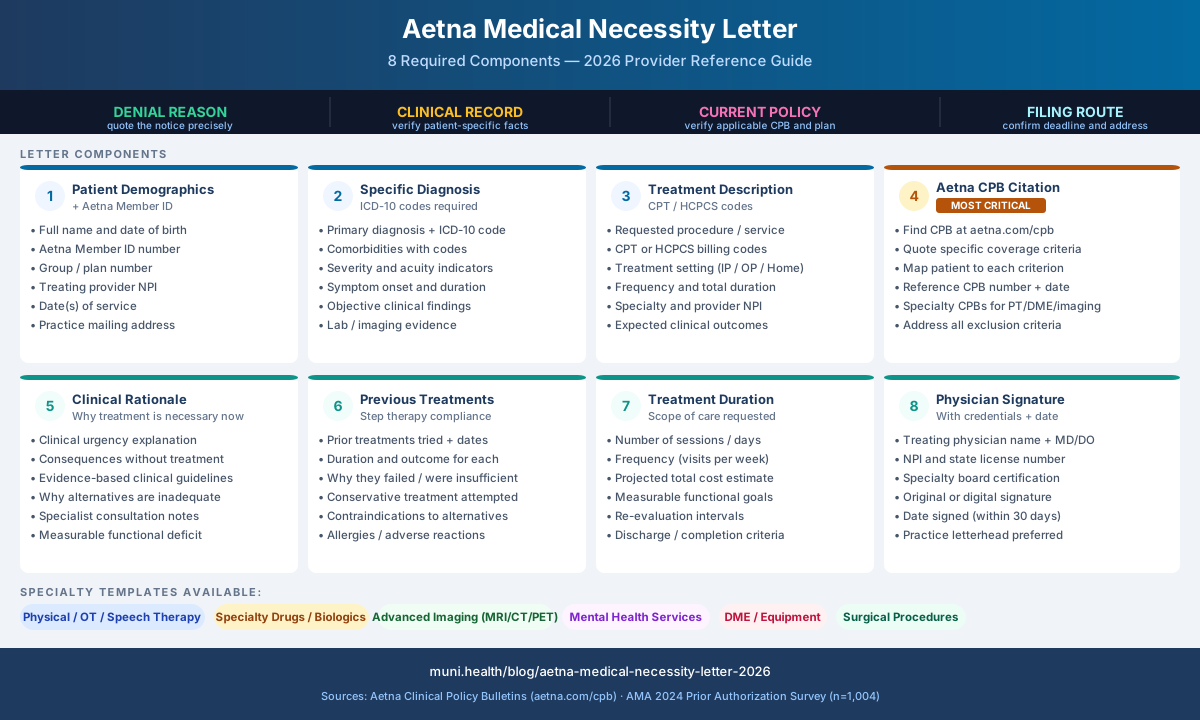
An Aetna medical necessity letter requires 8 essential components: patient demographics with member ID, specific diagnosis with ICD-10 codes, detailed treatment description with CPT/HCPCS codes, Aetna CPB citation demonstrating coverage criteria compliance, clinical rationale explaining why treatment is necessary now, previous treatments attempted with outcomes, treatment duration, and physician signature with credentials. Letters must reference Aetna's specialty-specific Clinical Policy Bulletins and demonstrate how the patient meets each coverage criterion with objective clinical evidence.
When Aetna Requires Medical Necessity Justification
Aetna requests medical necessity documentation before approving coverage for services they classify as potentially inappropriate, experimental, or requiring clinical justification. Understanding when to submit a medical necessity letter—before treatment or as part of a denial appeal—saves time and prevents payment delays.
Pre-Authorization Medical Necessity
Aetna requires medical necessity justification before treatment for:
Specialty Medications:
- Biologics and specialty pharmaceuticals exceeding $1,000 per month
- Off-label medication use
- Step therapy exceptions (requesting brand over generic, or bypassing first-line treatment)
Advanced Imaging:
- MRI, CT, and PET scans
- Repeat imaging within short timeframes
- Advanced imaging for non-specific symptoms
Extended Therapy Services:
- Physical therapy beyond 20 visits
- Occupational therapy beyond 20 visits
- Speech therapy requiring long-term intervention
Surgical Procedures:
- Elective or reconstructive surgeries
- Procedures with cosmetic components
- Alternative surgical approaches to standard care
Durable Medical Equipment (DME):
- Power wheelchairs and scooters
- Hospital beds for home use
- Continuous Positive Airway Pressure (CPAP) devices
Pre-Authorization Success Rates
According to the AMA's 2024 Prior Authorization Survey, physicians report patients abandoning treatment due to prior authorization struggles. A complete medical necessity letter can address the stated denial criteria, but approval depends on the plan, current policy, clinical evidence, and payer review.
Appeal Medical Necessity (Post-Denial)
Aetna denies claims for "medical necessity not established" when:
- Initial documentation was insufficient
- Service doesn't appear to meet CPB coverage criteria
- Diagnosis code doesn't align with standard care protocols
- Treatment considered experimental or unproven
In these cases, a comprehensive medical necessity letter as part of your appeal materially improves overturn odds — the AMA's analysis of prior authorization appeals found over 80% of properly documented prior authorization appeals succeed in getting the denial partially or fully overturned.
Aetna's Medical Necessity Definition & Clinical Policy Bulletins
Aetna defines medical necessity on a case-by-case basis according to their Clinical Policy Bulletins (CPBs). Understanding this definition and citing the correct CPB is critical for approval.
For comprehensive guidance on writing effective medical necessity letters across all insurers — including standard vs. expedited templates and payer criteria citations — see our medical necessity justification letter guide 2026.
Aetna's Official Medical Necessity Standard
According to Aetna's provider manual, services are medically necessary when they are:
- Appropriate for the symptoms, diagnosis, or treatment of the condition
- Provided for diagnosis, direct care, and treatment of the condition
- Within standards of good medical practice in the medical community
- Not primarily for convenience of the member or provider
- Most appropriate supply or level of service that can safely be provided
This is intentionally vague—Aetna's CPBs provide the specific criteria you must demonstrate.
How to Use Aetna Clinical Policy Bulletins
Step 1: Identify the Relevant CPB
- Search Aetna's CPB database at Aetna.com/health-care-professionals/clinical-policy-bulletins
- Enter your procedure name or CPT code
- Note the CPB number (e.g., CPB #0325)
Step 2: Extract Coverage Criteria Each CPB lists "medically necessary" criteria—usually 3-5 specific requirements. Example from CPB #0325 (Physical Therapy):
"Physical therapy is considered medically necessary when:
- The member has a condition expected to improve significantly
- Treatment involves skilled therapy requiring expertise of a therapist
- Functional goals can be achieved in a reasonable period
- Therapy is provided per an ongoing written plan of care"
Step 3: Map Patient to Criteria Your medical necessity letter must explicitly demonstrate how your patient meets each criterion with objective clinical evidence.
Most Common Medical Necessity Mistake
Generic statements like "patient requires physical therapy for back pain" don't establish medical necessity. You must cite the specific Aetna CPB, quote the criteria, and provide measurable clinical evidence for each requirement. Vague justifications are among the most common reasons Aetna denies medical necessity requests.
Common Aetna CPB Numbers by Specialty
| Service Type | CPB Number | CPB Title |
|---|---|---|
| Physical Therapy | #0325 | Physical Therapy |
| Occupational Therapy | #0250 | Occupational Therapy |
| MRI/CT Spine Imaging | #0236 | MRI and CT of the Spine |
| Durable Medical Equipment | #0114 | Seat Lift Chairs (example DME) |
| Home Health Services | #0004 | Home Health Care |
| Genetic Testing | #0140 | Genetic Testing |
| Behavioral Health | Various | Search by specific therapy type |
Access the full CPB database to find your specific service.
Essential Components of an Aetna Medical Necessity Letter
After analyzing thousands of approved Aetna medical necessity letters, these 8 components separate successful submissions from denied requests:
1. Complete Patient & Provider Identification
Patient Information:
- Full legal name
- Date of birth
- Aetna Member ID (from insurance card)
- Group number and employer/plan sponsor
Provider Information:
- Your name with credentials (MD, DO, PT, PharmD, etc.)
- Medical license number
- National Provider Identifier (NPI)
- Practice name, address, phone, fax
- Tax ID for billing
2. Specific Diagnosis with ICD-10 Codes
Aetna cross-references your diagnosis against standard treatment protocols. Be specific:
❌ Too Vague: "Patient has back pain"
✅ Specific: "Patient has lumbar spinal stenosis with neurogenic claudication (ICD-10: M48.06) and L4-L5 disc herniation with radiculopathy (ICD-10: M51.16)"
Include:
- Primary diagnosis (ICD-10 code)
- Secondary/contributing diagnoses
- Date of diagnosis
- Diagnostic test results confirming diagnosis (MRI, X-ray, labs)
3. Detailed Treatment Description
Describe exactly what you're requesting with medical codes:
For Medications:
- Drug name (generic and brand)
- Dosage and frequency
- Route of administration
- Expected duration of therapy
- NDC code (if available)
For Procedures/Services:
- Specific procedure or service name
- CPT or HCPCS code
- Frequency (e.g., "3x per week for 8 weeks")
- Location where service will be provided
- Expected number of sessions/treatments
For DME:
- Equipment name and specifications
- HCPCS code
- Medical features required (not standard features)
- Expected duration of need
4. Aetna CPB Compliance Demonstration
This is the critical section that determines approval or denial.
Format:
According to Aetna Clinical Policy Bulletin #[NUMBER] - [TITLE]
(last updated [DATE]), [service] is considered medically necessary when:

"[Quote exact CPB language for criterion #1]"

[Patient Name] meets this criterion because [specific clinical evidence
with objective measures].

"[Quote exact CPB language for criterion #2]"

[Patient Name] meets this criterion because [specific clinical evidence].

[Continue for all CPB criteria]
Skip the blank template. Start with a review-ready draft.
Use the template as guidance, or let Muni prepare a payer-specific draft for your team to verify, sign, and submit.
First 3 appeals free, then $20 per appeal. Start with your denial letter or EOB and available records. No meeting or clearinghouse connection required.
5. Clinical Rationale (Why This Treatment, Why Now)
Explain the clinical reasoning with:
Current Clinical Status:
- Objective findings (exam findings, test results, functional limitations)
- Symptoms and their impact on daily living
- Disease progression or risk without treatment
- Measurable functional deficits
Why This Specific Treatment:
- Evidence base supporting this intervention
- Expected clinical outcomes
- How treatment addresses the underlying pathology
- Alternatives considered and why they're inadequate
Why Immediate Treatment is Necessary:
- Risk of delay (disease progression, permanent disability, quality of life impact)
- Window of opportunity for optimal outcomes
- Urgency factors if applicable
6. Previous Treatments Attempted
Aetna often requires demonstration of conservative management failure before approving advanced treatments.
Document:
- Each prior treatment with specific dates and duration
- Objective outcomes of each intervention (not just "failed")
- Why each was inadequate with measurable criteria
- Contraindications to alternatives you haven't tried
Example: "Patient completed 12 weeks of conservative management including NSAIDs (ibuprofen 600mg TID, 9/1/25-11/20/25) with inadequate pain relief (VAS 8/10 → 7/10), home exercise program (demonstrated compliance with logs), and 8 sessions of chiropractic care with no sustained functional improvement. ROM remains limited at 30° lumbar flexion vs 90° normal."
7. Treatment Duration with Goals
Aetna rejects "indefinite" treatment requests. Specify:
Duration:
- Exact timeframe (e.g., "12 weeks" not "several months")
- Frequency and number of sessions
- Re-evaluation timeline
Measurable Goals:
- Objective functional outcomes expected
- Clinical markers of success
- Timeline for achieving each goal
- Plan for discontinuation or tapering
Example: "Requesting 24 sessions of physical therapy (3x/week for 8 weeks) with goals of: (1) Increase lumbar flexion from 30° to 70° by week 4, (2) Reduce VAS pain score from 7/10 to 3/10 by week 6, (3) Return to independent ambulation without assistive device by week 8. Re-evaluation at 4 weeks to assess progress toward goals."
8. Supporting Clinical Evidence
Reference evidence-based support:
Medical Society Guidelines:
- Full guideline name with year
- Specific recommendation supporting your treatment
- Quote relevant language
Peer-Reviewed Research:
- Author, journal, year, sample size
- Key finding supporting medical necessity
- PubMed ID if available
FDA Approval Status:
- For medications/devices
- Approved indication vs. off-label use
- Clinical trial data
Example 1: Physical Therapy Medical Necessity Letter
[Date]

Aetna Prior Authorization Department
P.O. Box 14079
Lexington, KY 40512

RE: Medical Necessity for Physical Therapy Services
Member: [Patient Full Name]
Member ID: [Aetna ID Number]
Date of Birth: [MM/DD/YYYY]
Group #: [Group Number]
Diagnosis: Lumbar Spinal Stenosis with Radiculopathy (ICD-10: M48.06, M54.16)
Requested Service: Physical Therapy, 24 sessions over 8 weeks (CPT 97110, 97112, 97530)
Provider: [Your Name, PT, DPT]
NPI: [Your NPI]

Dear Aetna Medical Director:

I am writing to document the medical necessity for skilled physical therapy services for [Patient Name], who requires intensive rehabilitation for lumbar spinal stenosis with neurogenic claudication and L4-L5 radiculopathy.

PATIENT CLINICAL PRESENTATION:
[Patient Name] is a [age]-year-old [occupation] who presents with progressive lower back and bilateral lower extremity pain, numbness, and weakness over the past 6 months. MRI performed on [date] confirmed lumbar spinal stenosis at L3-L4 and L4-L5 with moderate central canal narrowing and foraminal stenosis, correlating with clinical radiculopathy findings.

Current Functional Limitations:
- Ambulation limited to 50 feet before onset of neurogenic claudication symptoms
- Unable to stand for more than 10 minutes (VAS pain increases from 4/10 to 8/10)
- Requires assistive device (cane) for community ambulation
- Unable to perform job duties requiring standing/walking
- Lumbar ROM: Flexion 30° (normal 90°), Extension 10° (normal 25°)
- Positive straight leg raise test bilaterally at 40°
- Decreased sensation L4-L5 dermatomes bilaterally
- Hip flexor strength 4/5, ankle dorsiflexion 4-/5

AETNA CPB COMPLIANCE:
According to Aetna Clinical Policy Bulletin #0325 - Physical Therapy (updated March 2025), physical therapy is considered medically necessary when:

**CPB Criterion 1:** "The member has a condition expected to improve significantly with a program of skilled therapy."

[Patient Name] meets this criterion. Lumbar spinal stenosis with radiculopathy at this stage responds well to conservative physical therapy management focusing on spinal stabilization, nerve mobilization, and functional strengthening. Per the North American Spine Society Clinical Guidelines for Lumbar Spinal Stenosis (2024), non-surgical management including structured physical therapy is first-line treatment with Level A evidence for symptom reduction and functional improvement.

**CPB Criterion 2:** "Treatment involves skilled therapy requiring the expertise of a licensed physical therapist."

The proposed treatment plan requires skilled PT services including:
- Manual therapy techniques for joint mobilization and neural mobilization (CPT 97140)
- Therapeutic exercises for lumbar stabilization and core strengthening (CPT 97110)
- Neuromuscular re-education for gait training and balance (CPT 97112)
- Functional activity training for return to work tasks (CPT 97530)

These interventions cannot be safely or effectively performed by non-licensed personnel or through home exercise alone. The patient's radiculopathy and balance deficits require skilled assessment and progression to prevent falls and neurological deterioration.

**CPB Criterion 3:** "Functional goals can be achieved in a reasonable and generally predictable period."

Based on current evidence and clinical presentation, the following measurable functional goals are expected within 8 weeks:
- Increase ambulation tolerance from 50 feet to 500 feet without neurogenic claudication symptoms (Goal: Week 6)
- Reduce VAS pain from 7/10 to 3/10 during functional activities (Goal: Week 6)
- Increase lumbar flexion ROM from 30° to 70° (Goal: Week 5)
- Improve hip flexor and ankle dorsiflexion strength to 5/5 bilaterally (Goal: Week 7)
- Independent ambulation without assistive device for community distances (Goal: Week 8)
- Return to work full duty (Goal: Week 8-10)

**CPB Criterion 4:** "Therapy is provided in accordance with an ongoing written plan of care."

A comprehensive PT plan of care has been developed (attached) including:
- Baseline measurements of all functional limitations
- Specific interventions with frequencies
- Objective, measurable goals with timelines
- Re-evaluation schedule (every 2 weeks)
- Discharge criteria

PREVIOUS CONSERVATIVE MANAGEMENT:
[Patient Name] has attempted the following conservative treatments without adequate functional improvement:

1. **NSAIDs (Ibuprofen 600mg TID):** 12 weeks (9/1/25-11/20/25)
 - Outcome: Pain reduced from VAS 8/10 to 7/10, insufficient for functional improvement

2. **Home Exercise Program:** 8 weeks (10/1/25-11/25/25)
 - Outcome: Patient demonstrated compliance with exercise logs, minimal functional gains (ambulation tolerance unchanged at 50 feet)

3. **Chiropractic Care:** 8 sessions over 4 weeks (10/15/25-11/12/25)
 - Outcome: Temporary symptom relief lasting <24 hours post-treatment, no sustained functional improvement

Conservative management has been inadequate, and the patient is now at risk of functional decline, chronic disability, and potential surgical intervention if skilled physical therapy is not initiated.

CLINICAL GUIDELINE SUPPORT:
**North American Spine Society (NASS) Evidence-Based Clinical Guidelines for Lumbar Spinal Stenosis (2024):**
"Physical therapy incorporating spinal stabilization exercises, manual therapy, and functional training is recommended as first-line treatment for symptomatic lumbar spinal stenosis (Grade A recommendation, Level 1 evidence)."

**American Physical Therapy Association Clinical Practice Guidelines (2023):**
Physical therapy combining manual therapy, therapeutic exercise, and body weight-supported treadmill training demonstrates significant improvements in walking distance (mean 121 meters improvement) and pain reduction (mean 1.9-point VAS reduction) in patients with neurogenic claudication from spinal stenosis (n=259, Whitman et al., Archives of Physical Medicine, 2021).

TREATMENT PLAN & DURATION:
Requesting approval for 24 physical therapy sessions over 8 weeks (3 sessions per week):

**Weeks 1-3 (9 sessions):** Pain management, gentle ROM, core activation
**Weeks 4-6 (9 sessions):** Progressive strengthening, functional mobility training
**Weeks 7-8 (6 sessions):** Return to work simulation, home program education

Re-evaluation at 4 weeks to assess progress toward functional goals. If patient achieves goals earlier than 8 weeks, therapy will be discontinued. If patient plateaus without goal achievement, referral for surgical consultation will be made.

MEDICAL NECESSITY SUMMARY:
[Patient Name]'s lumbar spinal stenosis with radiculopathy meets all Aetna CPB #0325 criteria for medically necessary physical therapy. The patient has disabling functional limitations preventing work and daily activities, has failed adequate conservative management, and has excellent rehabilitation potential based on current clinical presentation and evidence-based outcomes for this diagnosis. Skilled physical therapy is medically necessary and appropriate as first-line treatment before considering surgical intervention.

I am available for peer-to-peer review at [phone] or [email].

Sincerely,

[Signature]
[Your Name, PT, DPT]
Physical Therapist License #: [Number]
NPI: [Number]
[Practice Name]
[Phone] | [Fax]

Enclosures:
- MRI Report (lumbar spine, [date])
- Initial Physical Therapy Evaluation
- Detailed Plan of Care
- Home Exercise Program Log (patient compliance documentation)
- NASS Guideline Excerpt
Example 2: Specialty Medication Medical Necessity Letter
[Date]

Aetna Pharmacy Prior Authorization
Fax: 1-888-267-3277

RE: Medical Necessity for Specialty Biologic Medication
Member: [Patient Name]
Member ID: [Aetna ID]
Date of Birth: [MM/DD/YYYY]
Diagnosis: Severe Plaque Psoriasis (ICD-10: L40.0)
Requested Medication: Adalimumab (Humira) 40mg subcutaneous every 2 weeks
Prescriber: [Physician Name, MD]
NPI: [NPI Number]

Dear Aetna Pharmacy Medical Director:

I am requesting prior authorization for adalimumab (Humira) 40mg subcutaneous injection every 2 weeks for my patient [Patient Name], who has severe, treatment-refractory plaque psoriasis causing significant functional impairment and quality of life impact.

PATIENT CLINICAL HISTORY:
[Patient Name] is a [age]-year-old [gender] with an 8-year history of plaque psoriasis, now progressing to severe disease despite multiple systemic therapies. Current disease severity:

- **Body Surface Area (BSA) Affected:** 35% (severe defined as >10% BSA)
- **Psoriasis Area and Severity Index (PASI) Score:** 28.4 (severe defined as >10)
- **Dermatology Life Quality Index (DLQI):** 22/30 (very large impact on quality of life)

Physical Examination Findings:
- Extensive erythematous plaques with silvery scale covering bilateral upper and lower extremities, trunk, and scalp
- Significant involvement of hands and feet interfering with manual dexterity and ambulation
- Nail psoriasis with onycholysis and pitting affecting 8/10 fingernails
- Joint swelling in bilateral hands and knees consistent with psoriatic arthritis

Functional Impact:
- Unable to perform job duties due to visible lesions and pain with movement
- Significant sleep disruption from pruritus and skin discomfort
- Social isolation and documented depression (PHQ-9 score: 16) related to disease visibility
- Unable to engage in physical activities due to pain and range of motion limitations

AETNA MEDICATION POLICY COMPLIANCE:
According to Aetna's Specialty Drug Prior Authorization criteria for biologic agents in psoriasis, adalimumab is considered medically necessary when:

**Criterion 1:** "Member has severe plaque psoriasis affecting >10% body surface area or PASI >10, OR psoriasis significantly affecting quality of life (DLQI >10)"

[Patient Name] meets this criterion with 35% BSA involvement, PASI score of 28.4, and DLQI of 22/30, all significantly exceeding severity thresholds.

**Criterion 2:** "Member has failed or has contraindications to conventional systemic therapies including methotrexate, cyclosporine, or phototherapy"

[Patient Name] has systematically trialed and failed multiple first-line therapies:

1. **Topical Corticosteroids (High-Potency):** 18 months (1/2024-6/2025)
 - Clobetasol 0.05% ointment BID
 - Outcome: Minimal improvement, BSA decreased from 40% to 35% only, inadequate response

2. **Methotrexate:** 6 months (7/2024-12/2024)
 - Dose escalated to 25mg weekly (maximum tolerated dose)
 - Outcome: No significant improvement in PASI score (26.8 → 27.2), discontinued due to persistent nausea and elevated liver enzymes (AST 89, ALT 102)

3. **Phototherapy (Narrowband UVB):** 4 months, 36 sessions (1/2025-4/2025)
 - Outcome: Partial response only (PASI reduced to 24.1), plateaued with no further improvement after 24 sessions, BSA still >30%

4. **Cyclosporine:** Contraindicated
 - Patient has uncontrolled hypertension (BP 162/98 despite two antihypertensive agents)
 - Baseline creatinine 1.3 mg/dL (borderline renal insufficiency)
 - Cyclosporine would pose unacceptable nephrotoxic and hypertensive risks

**Criterion 3:** "Medication is FDA-approved for the requested indication"

Adalimumab (Humira) received FDA approval in 2008 for adult patients with moderate to severe chronic plaque psoriasis who are candidates for systemic therapy or phototherapy. The requested use is on-label.

CLINICAL RATIONALE FOR ADALIMUMAB:
Adalimumab is an appropriate choice for [Patient Name] based on:

**Efficacy Data:**
Multiple Phase 3 trials demonstrate adalimumab achieves PASI 75 response in 71% of patients and PASI 90 in 45% of patients at 16 weeks (Menter et al., Journal of the American Academy of Dermatology, 2008, n=1,212).

**Safety Profile:**
Patient has no contraindications to TNF-alpha inhibitor therapy:
- Negative PPD and QuantiFERON-TB Gold (tested [date])
- No history of demyelinating disease or congestive heart failure
- Hepatitis B and C serology negative
- No active infections

**Guideline Support:**
The American Academy of Dermatology Guidelines for Psoriasis (2024 Update) recommend TNF-alpha inhibitors as first-line biologic therapy for severe plaque psoriasis after failure of conventional systemic agents (Grade A recommendation).

TREATMENT PLAN:
**Dosing:** Adalimumab 80mg subcutaneous initial dose, followed by 40mg every 2 weeks starting 1 week after initial dose

**Monitoring:**
- PASI and BSA assessment every 4 weeks
- DLQI assessment every 8 weeks
- CBC, CMP, liver enzymes every 12 weeks
- Target: PASI 75 response by week 16 (expected based on clinical trial data)

**Duration:** Indefinite, with regular re-evaluation for ongoing medical necessity. If patient fails to achieve PASI 50 response by week 16, therapy will be discontinued and alternative biologic considered.

MEDICAL NECESSITY SUMMARY:
[Patient Name] has severe, debilitating plaque psoriasis that has failed all appropriate first-line and second-line systemic therapies. The disease is causing significant functional impairment, preventing the patient from working, and severely impacting quality of life and mental health. Adalimumab is FDA-approved, guideline-recommended, and medically necessary for this patient to achieve disease control and restore functional capacity.

I am available for peer-to-peer review at [phone] or [email] to discuss this case further.

Sincerely,

[Signature]
[Physician Name, MD, Board-Certified Dermatology]
Medical License #: [Number]
NPI: [Number]
[Practice Name]
[Phone] | [Fax]

Enclosures:
- Clinical photographs showing disease severity
- PASI score calculations
- DLQI questionnaire
- Previous treatment records (methotrexate, phototherapy)
- Lab results (PPD, QuantiFERON, hepatitis panel, CBC, CMP)
- AAD Guideline excerpt
Example 3: Advanced Imaging (MRI) Medical Necessity Letter
[Date]

Aetna Radiology Management
Fax: [Imaging auth fax from denial]

RE: Medical Necessity for Lumbar Spine MRI
Member: [Patient Name]
Member ID: [Aetna ID]
Date of Birth: [MM/DD/YYYY]
Diagnosis: Lumbar Radiculopathy, Rule Out Disc Herniation (ICD-10: M54.16, M51.16)
Requested Study: MRI Lumbar Spine without contrast (CPT 72148)
Ordering Physician: [Physician Name, MD]
NPI: [NPI]

Dear Aetna Imaging Medical Director:

I am requesting prior authorization for MRI of the lumbar spine without contrast for [Patient Name], who presents with progressive lumbar radiculopathy and neurological deficits requiring immediate advanced imaging to rule out surgical pathology.

CLINICAL PRESENTATION:
[Patient Name] is a [age]-year-old presenting with acute-on-chronic lower back pain with left lower extremity radiculopathy over the past 6 weeks, now with progressive neurological symptoms concerning for nerve root compression.

Current Symptoms:
- Severe left leg pain radiating from buttock to lateral calf and foot (dermatomal distribution consistent with L5 radiculopathy)
- Numbness in left L5 dermatome (lateral calf and dorsum of foot)
- Progressive weakness in left ankle dorsiflexion over past 2 weeks
- Pain severity VAS 8/10, worsens with sitting, forward flexion, and Valsalva
- Night pain disrupting sleep

Physical Examination Findings:
- Positive straight leg raise test on left at 35° (reproduces leg pain)
- Decreased sensation to light touch in L5 dermatome (left lateral calf and foot dorsum)
- **Motor weakness: Left ankle dorsiflexion 4-/5 (vs 5/5 on right)** - PROGRESSIVE DEFICIT
- Left extensor hallucis longus 4/5
- Diminished left Achilles reflex
- Pain with lumbar flexion and lateral bending to left

AETNA CPB COMPLIANCE:
According to Aetna Clinical Policy Bulletin #0236 - MRI and CT of the Spine (updated January 2025), MRI of the lumbar spine is considered medically necessary when:

**CPB Criterion 1:** "Member has radicular pain (pain radiating below the knee) with objective neurological findings"

[Patient Name] meets this criterion with:
- Radicular pain in dermatomal L5 distribution to foot
- Objective motor weakness (ankle dorsiflexion 4-/5)
- Sensory deficit in L5 dermatome
- Positive straight leg raise test
- Diminished deep tendon reflex

**CPB Criterion 2:** "Imaging findings will change clinical management"

MRI results will directly determine management:
- If significant disc herniation with nerve root compression is identified → Neurosurgery referral for consideration of microdiscectomy
- If spinal stenosis is identified → Targeted ESI vs surgical decompression discussion
- If no compressive pathology → Continuation of conservative care with reassurance

The patient has **progressive motor weakness**, which is a red flag symptom requiring urgent imaging. Delay in diagnosis and treatment of severe nerve root compression can result in permanent neurological deficit.

**CPB Criterion 3:** "Conservative management has been attempted for 6 weeks OR red flag symptoms are present"

[Patient Name] has both:

1. **Six Weeks of Conservative Management:**
 - NSAIDs (naproxen 500mg BID) for 6 weeks: Insufficient pain relief
 - Physical therapy: 8 sessions over 4 weeks: Pain worsened with McKenzie extension exercises
 - Oral corticosteroids (prednisone taper): Temporary relief for 3 days, symptoms returned

2. **Red Flag Symptoms:**
 - **Progressive motor weakness** (ankle dorsiflexion declining over 2 weeks)
 - Neurological deficits (sensory loss, reflex changes)
 - Failure of conservative management
 - Symptoms suggestive of nerve root compression requiring timely intervention

CLINICAL URGENCY:
The presence of progressive motor weakness indicates evolving nerve root compression that may benefit from surgical decompression. Delayed diagnosis could result in permanent foot drop and long-term disability.

Per the North American Spine Society Clinical Guidelines for Radiculopathy (2023), "MRI is appropriate when surgical intervention is being considered or when progressive neurological deficits are present."

PREVIOUS IMAGING:
Lumbar X-rays performed [date] showed degenerative disc disease at L4-L5 and L5-S1 but cannot visualize disc herniation or nerve root compression. MRI is necessary to evaluate soft tissue structures and confirm the presence and severity of nerve root compression.

TREATMENT PLAN CONTINGENT ON MRI:
- If significant nerve root compression → Neurosurgery referral within 1 week
- If moderate compression without instability → Epidural steroid injection
- If no significant compression → Continue conservative management with reassurance and PT modification

MEDICAL NECESSITY SUMMARY:
[Patient Name] presents with acute lumbar radiculopathy with objective neurological findings including progressive motor weakness, meeting Aetna CPB #0236 criteria for medically necessary MRI. Conservative management has been attempted for 6 weeks without improvement, and red flag symptoms are present requiring urgent advanced imaging. MRI findings will directly determine whether surgical consultation is necessary to prevent permanent neurological injury.

I am available for peer-to-peer review at [phone].

Sincerely,

[Signature]
[Physician Name, MD]
Medical License #: [Number]
NPI: [Number]
[Phone] | [Fax]

Enclosures:
- Physical examination documentation
- X-ray report (lumbar spine, [date])
- Physical therapy notes (documenting failed conservative management)
Example 4: Mental Health Services Medical Necessity Letter
[Date]

Aetna Behavioral Health Management
Fax: [BH auth fax]

RE: Medical Necessity for Continued Outpatient Psychotherapy
Member: [Patient Name]
Member ID: [Aetna ID]
Date of Birth: [MM/DD/YYYY]
Diagnosis: Major Depressive Disorder, Recurrent, Severe (ICD-10: F33.2); Generalized Anxiety Disorder (ICD-10: F41.1)
Requested Service: Individual Psychotherapy, 52 sessions (1x/week for 12 months) (CPT 90834)
Provider: [Therapist Name, PhD, Licensed Psychologist]
NPI: [NPI]

Dear Aetna Behavioral Health Medical Director:

I am requesting authorization for continued individual psychotherapy (CPT 90834, 45-minute sessions, 1x per week for 12 months) for [Patient Name], who has severe, treatment-refractory major depressive disorder and generalized anxiety disorder requiring ongoing intensive outpatient therapy to prevent psychiatric hospitalization and maintain safety.

CLINICAL PRESENTATION:
[Patient Name] is a [age]-year-old with a 5-year history of major depressive disorder and generalized anxiety disorder, currently experiencing a severe depressive episode despite medication management. The patient presents with active suicidal ideation (without plan or intent), severe functional impairment, and high risk of decompensation without continued intensive therapy.

Current Symptoms:
- **Depression Severity (PHQ-9):** 21/27 (severe depression)
- **Anxiety Severity (GAD-7):** 18/21 (severe anxiety)
- Active suicidal ideation (weekly), no current plan or intent
- Anhedonia - unable to experience pleasure in previously enjoyed activities
- Sleep disturbance (insomnia, averaging 3-4 hours/night)
- Significant appetite/weight changes (15-lb unintentional weight loss over 8 weeks)
- Difficulty concentrating affecting work performance (now on FMLA leave)
- Social withdrawal and isolation

Functional Impairment:
- Unable to work (on FMLA leave for past 6 weeks)
- Difficulty with activities of daily living (showering, meal preparation inconsistent)
- Loss of social support due to isolation
- Strained family relationships
- High suicide risk requiring weekly safety monitoring

AETNA BEHAVIORAL HEALTH MEDICAL NECESSITY CRITERIA:
According to Aetna's Behavioral Health Coverage Criteria, continued outpatient therapy is medically necessary when:

**Criterion 1:** "Member has a DSM-5 diagnosable mental health disorder causing functional impairment"

[Patient Name] meets full DSM-5 criteria for Major Depressive Disorder, Recurrent, Severe (F33.2) and Generalized Anxiety Disorder (F41.1), with significant functional impairment in occupational, social, and self-care domains.

**Criterion 2:** "Symptoms pose risk of deterioration without continued treatment"

[Patient Name] is at high risk of psychiatric hospitalization or self-harm without continued weekly therapy:
- Active suicidal ideation requiring weekly safety assessment
- Previous psychiatric hospitalization (2 years ago) following therapy discontinuation
- Severe symptom severity (PHQ-9: 21, GAD-7: 18) indicating high relapse risk
- Minimal social support increasing isolation risk

**Criterion 3:** "Member is making progress toward treatment goals OR has reasonable expectation of progress"

[Patient Name] has demonstrated measurable progress over past 12 weeks of weekly therapy:
- PHQ-9 decreased from 25 (baseline) to 21 (current) - 16% improvement
- Suicidal ideation frequency decreased from daily to weekly
- Returned to partial work schedule (20 hours/week, up from 0)
- Engaging in behavioral activation exercises (tracking pleasant activities)
- Improved medication compliance from 60% to 95% with therapy support

Treatment goals with expected timelines:
- Reduce PHQ-9 to <10 (moderate depression) by month 6
- Eliminate suicidal ideation by month 4
- Return to full-time work by month 6
- Establish 3+ social connections/support persons by month 8
- Develop 5+ adaptive coping skills by month 5

**Criterion 4:** "Treatment is consistent with evidence-based practice for the diagnosis"

Treatment follows evidence-based Cognitive Behavioral Therapy (CBT) protocol for major depression, demonstrated effective in multiple meta-analyses (Cuijpers et al., World Psychiatry 2023: CBT shows moderate to large effect sizes for depression, d=0.63, n=409 studies).

CURRENT TREATMENT PLAN:
**Psychotherapy Modality:** Cognitive Behavioral Therapy (CBT) with behavioral activation

**Session Structure:**
- Weekly 45-minute individual sessions (CPT 90834)
- Focus on cognitive restructuring of negative thought patterns
- Behavioral activation to increase rewarding activities
- Safety planning and suicide risk assessment at each session
- Coordination with psychiatrist for medication management

**Medication Management:**
- Escitalopram 20mg daily (optimal dose, good tolerability)
- Trazodone 100mg at bedtime for insomnia
- Weekly psychiatry follow-up for medication monitoring

**Treatment Duration Rationale:**
Requesting 52 weekly sessions (12 months) based on:
- Severity of current episode (severe depression, PHQ-9: 21)
- Chronicity of illness (5-year history with recurrent episodes)
- High suicide risk requiring extended monitoring
- Evidence that longer CBT courses (20+ sessions) prevent relapse better than brief interventions (Vittengl et al., Journal of Clinical Psychiatry 2022)

PREVIOUS TREATMENT HISTORY:
[Patient Name] has engaged in continuous treatment including:

1. **Medication Trials:** 4 previous antidepressant trials
 - Sertraline 200mg: Inadequate response
 - Fluoxetine 60mg: Side effects (GI distress)
 - Bupropion 450mg: Increased anxiety
 - Current: Escitalopram 20mg (optimal dose, partial response)

2. **Previous Therapy:** 6 months of brief solution-focused therapy (2 years ago)
 - Outcome: Partial improvement followed by relapse when therapy ended prematurely (insurance authorization lapse)
 - Previous hospitalization occurred 4 months after therapy discontinuation

3. **Current Episode:** 12 weeks of weekly CBT
 - Demonstrating measurable progress (PHQ-9: 25 → 21)
 - Treatment adherence >95%
 - Strong therapeutic alliance

RISK OF DISCONTINUATION:
Premature therapy termination poses substantial risks:
- Relapse to severe depression (history of relapse with therapy gaps)
- Increased suicide risk without weekly safety monitoring
- Potential psychiatric hospitalization (more costly than outpatient therapy)
- Loss of functional gains (return to work at risk)
- Medication non-compliance without therapy support

MEDICAL NECESSITY SUMMARY:
[Patient Name] has severe, recurrent major depression with active suicidal ideation, meeting all Aetna criteria for medically necessary continued weekly psychotherapy. The patient is demonstrating measurable progress with evidence-based CBT, but remains at high risk of decompensation, self-harm, or hospitalization without sustained treatment. Weekly therapy for 12 months is medically appropriate and necessary to achieve symptom remission, maintain safety, and prevent relapse.

I am available for peer-to-peer review at [phone] or [email].

Sincerely,

[Signature]
[Therapist Name, PhD, Licensed Psychologist]
License #: [Number]
NPI: [Number]
[Practice Name]
[Phone] | [Fax]

Enclosures:
- PHQ-9 and GAD-7 score tracking (baseline to current)
- Treatment plan with measurable goals
- Safety plan documentation
- Psychiatry medication management notes
Example 5: Durable Medical Equipment (DME) Medical Necessity Letter
[Date]

<AutoInlineCTA category="Insurance Appeals" location="blog_back_half" />


Aetna DME Prior Authorization
Fax: [DME auth fax]

RE: Medical Necessity for Power Wheelchair
Member: [Patient Name]
Member ID: [Aetna ID]
Date of Birth: [MM/DD/YYYY]
Diagnosis: Advanced Multiple Sclerosis with Paraparesis (ICD-10: G35, G82.20)
Requested Equipment: Power Wheelchair with Tilt-in-Space (HCPCS K0823)
Prescribing Physician: [Physician Name, MD]
NPI: [NPI]

Dear Aetna DME Medical Director:

I am requesting prior authorization for a power wheelchair with tilt-in-space and power seating functions for [Patient Name], who has advanced multiple sclerosis with severe lower extremity weakness and fatigue, preventing safe ambulation or use of a manual wheelchair.

PATIENT CLINICAL STATUS:
[Patient Name] is a [age]-year-old with advanced multiple sclerosis (diagnosed [year], [duration] years' duration) presenting with progressive bilateral lower extremity weakness, spasticity, and severe MS-related fatigue preventing safe independent mobility.

Current Functional Limitations:
- **Ambulation:** Non-ambulatory. Unable to walk more than 10 feet even with walker (requires maximum assist of 2 persons)
- **Upper Extremity Strength:** Bilateral upper extremity weakness (4-/5 shoulder, 4/5 grip strength)
- **Endurance:** Severe MS-related fatigue; unable to propel manual wheelchair for more than 50 feet without rest
- **Balance:** Impaired sitting balance with risk of falls from manual wheelchair
- **ADL Independence:** Requires assistance with transfers, dressing, bathing due to mobility limitations

Physical Examination:
- Bilateral lower extremity spasticity (Modified Ashworth Scale 3/4)
- Hip flexor strength 2/5 bilaterally
- Knee extensor strength 2/5 bilaterally
- Ankle dorsiflexion 1/5 bilaterally (trace movement only)
- Upper extremity strength: Shoulder 4-/5, elbow 4/5, grip 4/5 bilaterally
- Unable to stand or bear weight without maximum assist of 2

AETNA DME MEDICAL NECESSITY CRITERIA:
According to Aetna's Durable Medical Equipment Policy for Power Wheelchairs, a power wheelchair is considered medically necessary when:

**Criterion 1:** "Member has a mobility limitation that significantly impairs ability to participate in mobility-related activities of daily living (MRADLs) in the home"

[Patient Name] meets this criterion. The patient is unable to perform essential MRADLs including:
- Toileting independently (bathroom is 30 feet from bedroom, cannot ambulate this distance)
- Meal preparation in kitchen (cannot safely propel manual wheelchair while carrying items)
- Personal hygiene at bathroom sink (fatigue prevents sustained manual wheelchair propulsion)

Without a power wheelchair, [Patient Name] is essentially bed-bound or confined to a single room, unable to perform basic self-care activities.

**Criterion 2:** "Member's mobility limitation cannot be sufficiently resolved by a cane or walker"

[Patient Name] cannot use a cane or walker due to:
- Bilateral lower extremity strength 2/5 (cannot bear weight)
- Unable to stand or ambulate even with maximum assist of 2 persons
- Severe spasticity preventing coordinated ambulation
- High fall risk (3 falls in past month attempting short-distance ambulation with walker)

**Criterion 3:** "Member lacks sufficient upper extremity strength or endurance to self-propel a manual wheelchair in the home"

[Patient Name] cannot safely use a manual wheelchair due to:
- **Endurance:** Severe MS-related fatigue prevents sustained propulsion (can propel only 50 feet before requiring rest)
- **Strength:** Bilateral upper extremity weakness (4-/5 shoulder, 4/5 grip) inadequate for sustained manual propulsion
- **Distance:** Home layout requires 150+ feet of wheelchair travel to access bathroom, kitchen, bedroom (3x beyond patient's manual wheelchair endurance)

Manual wheelchair trial performed on [date] with physical therapy: Patient could propel 50 feet before onset of severe fatigue and arm pain, insufficient for home MRADL distances.

**Criterion 4:** "Member can safely operate power wheelchair controls"

[Patient Name] demonstrates:
- Cognitive ability to operate power wheelchair safely (Mini-Mental State Exam: 29/30, intact)
- Adequate upper extremity strength and coordination to operate joystick control (4/5 grip strength, fine motor control intact)
- Vision adequate for safe navigation (corrected vision 20/25)
- Demonstrated safe operation during power wheelchair evaluation with DME supplier on [date]

**Criterion 5:** "Member has appropriate home environment for power wheelchair use"

Home assessment completed on [date] confirms:
- Doorways measure 36 inches (standard power wheelchair is 25 inches wide - adequate clearance)
- Level flooring throughout living areas (no stairs to navigate)
- Adequate turning radius in bathroom, bedroom, kitchen
- Ramp installed at entrance (eliminates threshold barrier)

MEDICAL NECESSITY FOR POWER SEATING FUNCTIONS:
Requesting power tilt-in-space function (in addition to basic power mobility) due to:

**Pressure Ulcer Risk:**
- Currently developing Stage 1 pressure injury over sacrum despite cushioning
- Unable to perform independent weight shifts due to lower extremity paralysis
- Braden Scale score: 14 (moderate risk)
- Power tilt function will allow independent pressure relief every 30 minutes

**Postural Hypotension:**
- Orthostatic vital signs: Supine BP 118/76, Sitting BP 88/54 (>20mmHg drop)
- Experiences dizziness and near-syncope after 20 minutes upright
- Power tilt allows position changes to alleviate orthostatic symptoms without caregiver assistance

**Spasticity Management:**
- Bilateral lower extremity spasticity worsens with prolonged static sitting
- Power recline allows position changes to reduce spasticity throughout day

Per Medicare LCD for Power Mobility Devices (L33789), power seating functions are covered when member has significant postural or skin integrity concerns that cannot be managed with manual positioning—both of which apply to [Patient Name].

PREVIOUS DME:
- **Manual Wheelchair (Current):** Inadequate due to fatigue and insufficient upper extremity strength/endurance
- **Walker:** Unsafe due to inability to bear weight and high fall risk
- **Cane:** Inappropriate for severity of bilateral lower extremity weakness

TREATMENT GOALS WITH POWER WHEELCHAIR:
- Achieve independent mobility for MRADLs (toileting, hygiene, meals) within home
- Prevent pressure ulcer development through independent weight shifts
- Reduce caregiver burden (currently requires assistance for all mobility)
- Improve quality of life and independence
- Enable participation in outpatient MS rehabilitation therapy (currently unable to attend due to mobility limitations)

MEDICAL NECESSITY SUMMARY:
[Patient Name] has advanced multiple sclerosis with severe bilateral lower extremity weakness and paralysis, preventing safe ambulation or manual wheelchair use. The patient meets all Aetna criteria for medically necessary power wheelchair including significant MRADL limitations in the home, inability to use cane/walker/manual wheelchair, demonstrated ability to safely operate controls, and appropriate home environment. Power seating functions are medically necessary for pressure ulcer prevention and orthostatic hypotension management. Without this equipment, [Patient Name] is bed-bound and unable to perform basic self-care activities.

I am available for peer-to-peer review at [phone] or [email].

Sincerely,

[Signature]
[Physician Name, MD]
Medical License #: [Number]
NPI: [Number]
[Practice Name]
[Phone] | [Fax]

Enclosures:
- Physical therapy evaluation with manual wheelchair trial results
- Home assessment documentation
- Photographs of home environment showing doorways and layout
- DME supplier evaluation (power wheelchair operation demonstration)
- Pressure ulcer assessment with photos
How to Leverage Clinical Policy Bulletins in Your Medical Necessity Letter
Aetna CPBs are your strongest tool for medical necessity approval. Here's the tactical approach:
Step 1: Find the Exact CPB
Search Strategy:
- Go to Aetna.com → Health Care Professionals → Clinical Policy Bulletins
- Use search function with your procedure/service name
- If not found by name, search by CPT or HCPCS code
- Note the CPB number and last update date
If CPB Access is Blocked:
- Call Aetna Provider Services: 1-888-632-3862
- Request the CPB document by number
- Ask them to email or fax it to you
- Reference: "I need CPB #[number] for a medical necessity letter"
Step 2: Extract All Coverage Criteria
CPBs typically list 3-6 specific criteria. Extract all of them verbatim.
Example from CPB #0325 (Physical Therapy):
"Aetna considers physical therapy medically necessary when ALL of the following criteria are met:
- The member has a condition expected to improve significantly...
- Treatment involves skilled therapy...
- Functional goals can be achieved...
- Therapy is provided per an ongoing written plan..."
Note the "ALL" requirement—you must address every criterion.
Step 3: Create a Criterion-by-Criterion Response
Format (Copy This Structure):
AETNA CPB COMPLIANCE:
According to Aetna Clinical Policy Bulletin #[NUMBER] - [TITLE]
(updated [DATE]), [service] is considered medically necessary when:

[Quote exact CPB language for Criterion 1]

[Patient Name] meets this criterion because:
- [Specific clinical evidence with objective measures]
- [Supporting test results or documentation]
- [How this specifically satisfies the criterion]

[Quote exact CPB language for Criterion 2]

[Patient Name] meets this criterion because:
- [Specific clinical evidence]
- [Objective findings]
- [Connection to criterion]

[Continue for ALL criteria listed in CPB]
Step 4: Anticipate Objections
Aetna reviewers look for reasons to deny. Address potential objections preemptively:
If CPB says "reasonable period":
- Define the specific timeframe you're requesting
- Explain why this duration is reasonable based on evidence
If CPB says "skilled therapy":
- Explain exactly what skilled interventions you'll provide
- Why these cannot be performed by non-licensed personnel
If CPB says "expected to improve":
- Cite evidence (clinical trials, guidelines) showing improvement rates
- Explain patient-specific factors predicting improvement
Why CPB Citations Matter
A criterion-by-criterion response makes it easier for the reviewer to compare the clinical record with Aetna's stated coverage requirements. It does not guarantee approval; the plan terms, current policy, and patient-specific evidence still control the decision.
Common Medical Necessity Denials & How to Strengthen Your Letter
Based on analysis of denied medical necessity requests, here are the most common failure points and how to fix them:
Denial Reason 1: "Insufficient clinical documentation"
What This Really Means: You didn't provide objective, measurable clinical findings. Subjective statements like "patient reports pain" aren't sufficient.
Fix:
- Include objective exam findings with measurements (ROM in degrees, strength testing results, functional limitations with distances/times)
- Attach test results (labs, imaging reports, diagnostic studies)
- Use validated assessment tools (PHQ-9 for depression, PASI for psoriasis, VAS for pain)
- Quantify functional impact (can't walk >50 feet, can't work, requires assistance with ADLs)
Denial Reason 2: "Treatment not consistent with Aetna medical policy"
What This Really Means: You didn't cite the CPB or failed to show how patient meets the criteria.
Fix:
- Always cite the CPB number, title, and update date
- Quote exact CPB language (don't paraphrase)
- Address every CPB criterion with specific evidence
- Link patient's clinical findings to each criterion explicitly
Denial Reason 3: "Failed to demonstrate medical necessity"
What This Really Means: You explained what treatment you want but not why this treatment, why now, why this patient.
Fix: Include all three components of medical necessity:
- What: Detailed description of treatment with codes
- Why: Clinical rationale based on diagnosis, evidence, guidelines
- Why Now: Urgency, risk of delay, window of treatment effectiveness
Denial Reason 4: "Alternative treatments not attempted"
What This Really Means: Aetna expected you to try conservative management first (step therapy).
Fix:
- Document every prior treatment with dates, duration, dosages
- Objective outcomes of each (not just "failed"—provide measurable results)
- Explain why alternatives are inadequate or contraindicated
- For step therapy denials: cite medical reasons why first-line therapy is inappropriate for this specific patient
Denial Reason 5: "Treatment duration excessive"
What This Really Means: You requested ongoing or "indefinite" treatment without justification.
Fix:
- Specify exact duration (number of weeks, sessions, months)
- Provide measurable goals with timelines
- Re-evaluation plan (when you'll assess progress)
- Discontinuation criteria (what outcomes trigger ending treatment)
How Muni Prepares Medical Necessity Letter Drafts
Writing comprehensive medical necessity letters takes significant staff time when done manually. Muni reduces blank-page work by preparing a review-ready draft; approval still depends on the payer, plan, evidence, and staff review.
Automated CPB Integration
Manual Process (45 minutes):
- Log into Aetna provider portal
- Search CPB database for relevant policy
- Read through 10-15 page CPB document
- Identify coverage criteria
- Draft criterion-by-criterion response
- Format letter properly
Muni-assisted process:
- Enter procedure/service and diagnosis
- Muni surfaces candidate Aetna CPB references for staff verification
- AI extracts all coverage criteria
- Generates criterion-by-criterion response template
- You fill in patient-specific clinical details
Medical Evidence Compilation
Manual Process (20 minutes):
- Search PubMed for supporting research
- Find medical society guidelines
- Copy citations and format properly
- Draft clinical rationale paragraph
Muni-assisted evidence drafting:
- AI compiles relevant clinical guidelines by diagnosis
- Generates evidence-based rationale with citations
- Formats in Aetna-preferred structure
Specialty-Specific Templates
Muni can prepare review-ready templates for:
- Physical therapy medical necessity (CPB #0325)
- Occupational therapy medical necessity (CPB #0250)
- Specialty medication prior authorization (biologic, specialty drugs)
- Advanced imaging medical necessity (CPB #0236)
- DME medical necessity (wheelchair, CPAP, hospital beds)
- Mental health services authorization
- Surgical procedure medical necessity
Each template includes:
- Relevant CPB citations pre-populated
- Criterion-by-criterion response structure
- Clinical guideline references
- Required documentation checklist
What Muni Prepares
- A draft organized around the applicable CPB criteria.
- A checklist of patient-specific evidence the practice should confirm.
- A review-ready structure; the treating clinician remains responsible for accuracy, signature, and submission.
- No guaranteed approval rate or recovery outcome.
Generate Your First Medical Necessity Letter Free →
Try 3 free medical necessity letters with automated CPB citations. No credit card required.
Frequently Asked Questions
What is the difference between a medical necessity letter and an appeal letter?
A medical necessity letter is submitted before treatment (for prior authorization) to document why a service is medically appropriate and should be covered. An appeal letter is submitted after a denial to challenge Aetna's coverage decision. Medical necessity letters focus on establishing clinical appropriateness, while appeal letters also address why the denial was incorrect. However, both require similar components: diagnosis, clinical rationale, CPB compliance, supporting evidence, and physician signature. Medical necessity letters can also be included within an appeal to strengthen your case after a denial.
How long should an Aetna medical necessity letter be?
An effective Aetna medical necessity letter should be 2-4 pages (800-1,500 words) depending on complexity. Include: (1) Patient/provider identification (half page), (2) Clinical presentation and diagnosis (half page), (3) Aetna CPB criterion-by-criterion compliance (1-2 pages—this is the most important section), (4) Previous treatments attempted (half page), (5) Treatment plan with duration and goals (half page), and (6) Supporting evidence and signature. Avoid unnecessary information unrelated to medical necessity. Longer is not better—focus on relevant clinical evidence that directly addresses CPB coverage criteria.
Do I need to include Aetna CPB citations in every medical necessity letter?
Yes. Aetna medical necessity determinations use Clinical Policy Bulletins alongside the member's plan terms and clinical record. Include the CPB number, title, current coverage criteria, and patient-specific evidence showing how each criterion is met. Verify the current CPB before submission; citations improve specificity but do not guarantee approval.
Can a physical therapist write a medical necessity letter for Aetna?
Yes, but with limitations. Physical therapists, occupational therapists, and other non-physician providers can write medical necessity letters for services within their scope of practice. However, Aetna often requires physician concurrence for therapist-written letters. Best practice: The treating therapist writes the clinical justification and treatment plan, then the referring physician adds a brief concurrence statement: "I have reviewed the above medical necessity justification and concur with the recommendation for [service]," followed by the physician's signature, credentials, and NPI. Physician co-signature strengthens approval likelihood.
How long does Aetna take to review medical necessity letters?
For prior authorization requests with medical necessity documentation, Aetna must respond within 14 calendar days for standard reviews. Expedited reviews (when delay would jeopardize health) receive decisions within 72 hours. For appeals that include medical necessity letters, timelines are 30 days (pre-authorized services) or 60 days (post-service claims). If you don't receive a decision within these timeframes, call Aetna Provider Services at 1-888-632-3862 to request status and expedited decision. Document all follow-up calls with dates and representative names.
What supporting documents should I attach to my medical necessity letter?
Essential attachments: (1) Clinical records—office notes documenting diagnosis and treatment rationale, diagnostic test results (labs, imaging, pathology), previous treatment records showing conservative management attempts; (2) Policy documentation—relevant pages from Aetna CPB showing coverage criteria (helps reviewer find the specific policy language you're citing); (3) Evidence base—medical society guideline excerpts supporting treatment, peer-reviewed journal abstracts (1-2 key studies), FDA approval letter for medications/devices; (4) Administrative—prescription or treatment order, prior authorization form if separate. Organize with a cover sheet listing each attachment for easy reviewer reference.
Can I use the same medical necessity letter template for all insurance companies?
No. While the general structure is similar, each insurer has specific medical policies you must cite. Aetna uses Clinical Policy Bulletins (CPBs), Blue Cross Blue Shield uses Medical Policy documents, and UnitedHealthcare uses Coverage Determination Guidelines. Always verify the current policy in the insurer's own database. Muni Appeals uses the uploaded denial and available sources to prepare insurer-specific draft citations for staff review.
What happens if my Aetna medical necessity letter is denied?
If your prior authorization with medical necessity letter is denied, you have 180 days to file a Level 1 appeal. In your appeal: (1) Address the specific denial reason stated in the denial letter, (2) Include an enhanced medical necessity justification with additional evidence, (3) Cite the same Aetna CPB and explain why the reviewer's determination was medically incorrect, (4) Add any new clinical information since the initial request, (5) Request peer-to-peer review (often more successful than written appeals alone). If Level 1 appeal is denied, you can file Level 2 appeal within 60 days, then external review if medical necessity denial exceeds $500 financial responsibility.
How do I request an expedited review for urgent medical necessity?
For urgent situations where standard 14-day review poses health risk, call 1-888-267-2637 and state "expedited prior authorization request." Submit your medical necessity letter via fax to 859-455-8650 marked "EXPEDITED REVIEW - URGENT" at the top. In your letter, include a dedicated "Clinical Urgency" section documenting: (1) Current urgent medical situation with objective findings, (2) Specific harm that will result from delay (disease progression, permanent injury, severe pain), (3) Why immediate treatment is necessary, (4) Your 24/7 availability for immediate peer-to-peer review with direct phone contact. Aetna must respond to expedited requests within 72 hours.
Should I include cost information in my medical necessity letter?
No. Medical necessity letters should focus exclusively on clinical justification—diagnosis, treatment rationale, evidence base, CPB compliance. Do not mention: treatment costs, insurance reimbursement rates, practice financial considerations, or arguments about coverage being "unfair" or "unreasonable." Aetna separates medical necessity determinations (made by medical directors) from coverage/payment decisions (made by benefits administrators). Including cost arguments in a medical necessity letter signals weak clinical justification and often results in denial. Focus solely on clinical appropriateness per Aetna's CPB criteria.
Can I submit a medical necessity letter after treatment has already been provided?
Yes, but success rates are lower. If treatment was emergent or urgent, you can submit a retroactive medical necessity justification explaining: (1) Why the service was immediately necessary, (2) Why delay for prior authorization would have caused harm, (3) Clinical findings at time of service supporting emergent nature, (4) Compliance with Aetna CPB criteria for emergent/urgent services. For non-emergent services provided without prior authorization, Aetna may deny payment entirely with limited appeal rights. Best practice: Always obtain prior authorization before elective treatments. If you forgot to get prior auth, submit medical necessity letter with appeal acknowledging administrative oversight but emphasizing clear medical necessity.
How do I cite medical society guidelines in my Aetna medical necessity letter?
Use this format for clinical guideline citations: [Medical Society Name] [Guideline Title] ([Year published]): "[Direct quote of specific recommendation relevant to your patient]." Example: "American Academy of Orthopaedic Surgeons Clinical Practice Guideline for Osteoarthritis of the Knee (2021): 'We recommend exercise therapy for patients with symptomatic osteoarthritis of the knee (Strong recommendation, moderate-quality evidence).' [Patient name] has symptomatic knee OA and is appropriate for this guideline-recommended intervention." Include: society name spelled out, guideline title, year, direct quote (not paraphrase), and immediate connection to your patient's situation. This demonstrates evidence-based practice and strengthens medical necessity.
Ready to Simplify Medical Necessity Documentation?
You know your treatment recommendations are medically appropriate. You know the clinical evidence supports them. But you don't have an hour to hunt down Aetna CPB criteria, compile clinical guidelines, and format medical necessity letters—not when you're treating patients.
Muni reduces the blank-page drafting work so you can focus on patient care.
What You Get:
- ⚡ Review-ready drafting from the denial and records you upload
- 📋 Candidate Aetna CPB references with criterion-by-criterion structure for staff verification
- 📈 No guaranteed outcome: staff verifies the current policy, evidence, deadline, and route
- 🏥 Specialty-specific templates for PT, OT, imaging, medications, DME, mental health
- 💰 3 free letters to try it risk-free (no credit card required)
How It Works:
- Enter diagnosis and requested service
- Muni surfaces candidate Aetna CPB references
- Muni prepares a criterion-by-criterion medical necessity draft
- Staff verifies the current policy and patient-specific clinical details
- Staff reviews, signs, and submits through Aetna's accepted channel
Generate Your First Medical Necessity Letter Free →
Build the Aetna-specific draft and evidence checklist, then review the clinical details before submission.
This guide reflects the Aetna sources reviewed in January 2026. Aetna updates CPBs regularly; verify current policy language in Aetna's official database before submission.