

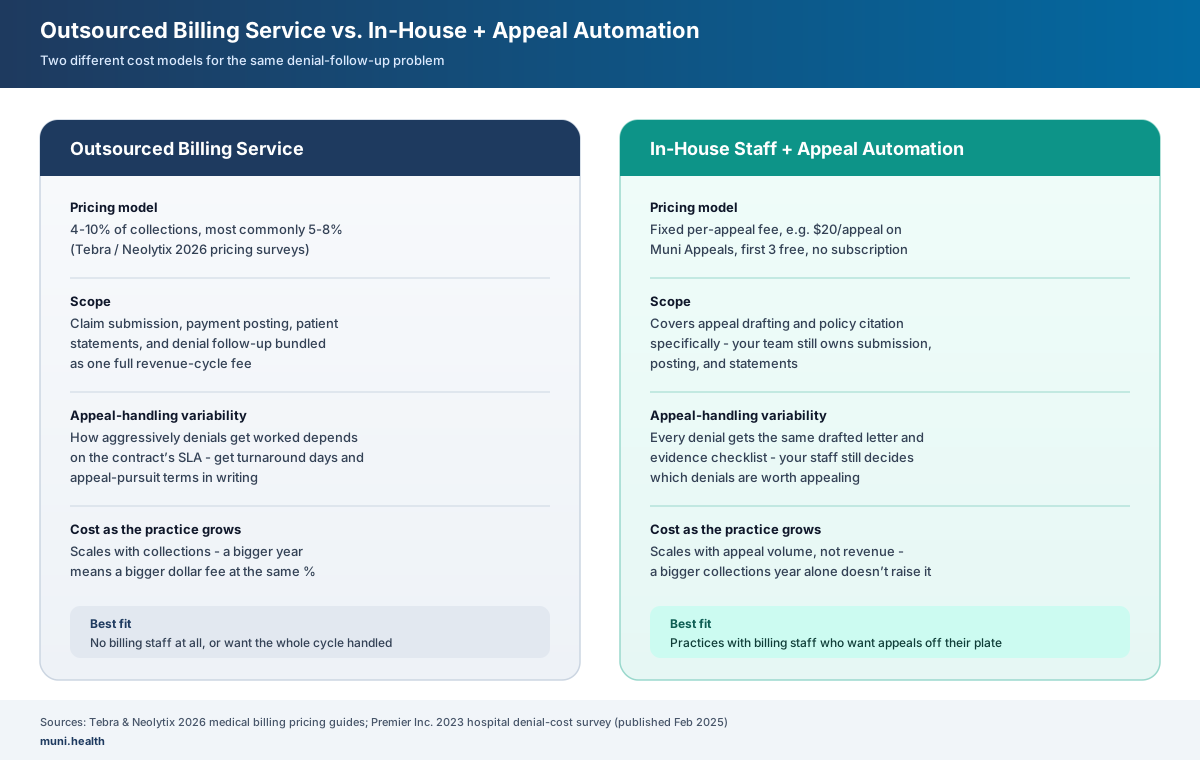
These solve different problems. An outsourced billing service charges 4-10% of collections — most commonly 5-8% — for the whole revenue cycle: submission, posting, statements, and denial follow-up bundled together (Tebra; Neolytix, 2026). Appeal automation like Muni Appeals prices only the appeal-drafting slice at $20 per appeal, first 3 free. Most practices with in-house billing staff combine the two rather than choosing one.
What "Outsourced Billing Service" Actually Means
A billing service takes over some or all of your revenue cycle for a percentage of what it collects on your behalf — not a flat fee, not a per-claim rate, a cut of the money that comes in. Two current pricing surveys agree on the range: Tebra's industry survey found billing companies using this model typically charge 4-10%, with 24.5% of respondents landing at 6-7% (Tebra, "How much should I charge for medical billing services?"). Neolytix's 2026 pricing guide puts the same range at 4-10% of net collections, with 5-8% most common for small to mid-sized practices and 10-12% for high-complexity specialties like cardiology and oncology, where coding density and prior-auth volume run higher (Neolytix, "What Is the Going Rate for Medical Billing Services?").
That fee typically covers the full cycle: claim submission, payment posting, patient statements, and some level of denial follow-up. It is not an appeals-specific price — it's what the vendor charges to run your billing operation, appeals included as one task among several.
Key Statistic
Medical billing services most commonly charge 5-8% of collections, with high-complexity specialties reaching 10-12% (Neolytix, 2026). Some vendors also offer per-claim ($3-12) or flat monthly ($500-2,500) alternatives to the percentage model — worth asking about if your collections are trending up faster than your claim volume.
What's Usually in the Contract — and What to Get in Writing
Denial follow-up quality varies enormously by vendor, and the percentage-of-collections structure doesn't automatically tell you how thoroughly a given company works your denials. A billing company that's paid on what it collects has a financial reason to prioritize the claims most likely to pay out — which isn't malicious, but it does mean a denial that looks harder to win can quietly sit.
One widely cited industry red-flags guide puts it plainly: a growing 90-120 day accounts-receivable bucket is a warning sign, not routine aging — "a billing company that allows this bucket to grow is not managing denials — it is aging them." The same guide treats a denial rate above 8% as unacceptable and expects a vendor to explain, code by code, why specific payers deny specific claims (Medical Billers and Coders, "Medical Billing Company Red Flags," 2026).
Before signing or renewing, get specific, written answers to:
- What's your current denial rate, and how does it break down by payer?
- What's the SLA for starting an appeal after a denial posts — same week, same month, no commitment?
- Is there a dollar threshold below which a denial doesn't get appealed?
- What level of appeal do you pursue by default — first-level only, or through external review if the first level fails?
- What does the monthly report show me: claims worked, appeals filed, appeals overturned, and claims written off?
Appeals are the one slice you can price separately
Muni Appeals drafts the letter, cites the payer's policy, and builds the evidence checklist for $20 per appeal — no bundled percentage, no minimum volume.
First 3 appeals free, then $20 per appeal. Start with your denial letter or EOB and available records. No meeting or clearinghouse connection required.
The Percentage-of-Collections Math, Worked Out
This is the fee for the entire billing operation — not just appeals — at the ranges both surveys cited above report:
| Annual Collections | At 5% | At 6% | At 8% | At 10% |
|---|---|---|---|---|
| $500,000 | $25,000 | $30,000 | $40,000 | $50,000 |
| $1,000,000 | $50,000 | $60,000 | $80,000 | $100,000 |
| $2,000,000 | $100,000 | $120,000 | $160,000 | $200,000 |
That fee scales with revenue, not with how many denials you actually appeal in a given month. Two practices collecting the same $1,000,000 pay the same percentage fee whether one of them appeals 5 denials a month and the other appeals 50 — the billing service's price doesn't isolate the appeals-specific cost at all.
To isolate just that slice, look at appeal volume directly. A national Premier Inc. survey of 280 hospitals found the average staff-labor cost to fight one denied claim was $57.23 in 2023 (Premier Inc., published Feb 24, 2025) — the same benchmark used in Muni Appeals Pricing Explained: $20 Per Appeal vs. the Real Cost of Manual Appeals, which has the full break-even math:
| Denials Appealed / Month | Manual Labor Cost (Premier benchmark) | Muni Appeals Cost ($20/appeal) |
|---|---|---|
| 5 | $286.15 | $100 |
| 20 | $1,144.60 | $400 |
| 50 | $2,861.50 | $1,000 |
Even at 50 appeals a month, the per-appeal cost stays a few thousand dollars a year — nowhere near the tens of thousands a percentage-of-collections fee runs on a $1M-$2M practice. That's expected: the percentage fee is paying for far more than appeals. The honest comparison isn't "billing service vs. Muni" — it's "does the appeals-specific work inside your current setup justify a dedicated tool," regardless of who handles the rest of the cycle.
Decision Factors by Practice Size and Denial Volume
| Practice Profile | Likely Best Fit | Why |
|---|---|---|
| Solo or 2-provider, no billing staff | Full outsourced billing service | No one in-house to run submission, posting, or appeals — the bundled fee buys the whole function |
| Small group with 1-2 billers, moderate denial volume | In-house billing + appeal automation | Staff already handles submission and posting; a per-appeal tool adds appeal drafting without adding headcount |
| High-denial specialty (e.g., imaging, oncology, orthopedics) | In-house appeals-focused staff + automation | Specialty percentage fees run 10-12%; at high collections, a flat per-appeal cost scales far better than a rate tied to revenue |
| Practice already paying a billing service but appeals feel slow | Keep the service, add a written appeal SLA — or bring appeals in-house | The gap is usually appeal-specific attention, not the whole billing relationship |
The Hybrid Model: In-House Staff + Automation
Most independent practices don't have to pick one model for every task. A common setup: keep claim submission and payment posting in-house (or with a billing service), and add dedicated tooling for the two labor-heavy pieces that a bundled percentage fee doesn't guarantee gets fast attention — appeal drafting and payer phone follow-up.
Muni Appeals handles the appeal-drafting piece: it takes the denial, cites the payer's specific policy, and builds an evidence checklist your team reviews and submits — for a flat $20 per appeal, first 3 free, no subscription, verified on the live pricing page. For the phone-call side — prior auth status checks, claim-status calls, eligibility verification — Muni Calls runs as a separate product, with receptionist plans starting at $499/month and fixed-quote managed operations for higher call volume. Neither product asks your practice to migrate EHRs or billing systems to get started.
For a fuller checklist on evaluating appeal automation software specifically — denial-data intake, payer-policy citation, deadline tracking, BAA coverage — see Insurance Appeal Automation Software for Small Practices: 2026 Buyer's Guide. And before deciding whether a given denial is even worth appealing in the first place, When to Appeal an Insurance Denial: Decision Framework covers the triage questions that matter more than which vendor you use.
Frequently Asked Questions
Is an outsourced billing service more expensive than appeal automation software?
Not directly comparable. A billing service's 4-10% fee pays for the entire revenue cycle — submission, posting, statements, and denial follow-up — while appeal automation software like Muni Appeals only prices the appeal-drafting task. A practice that keeps its billing service and adds a per-appeal tool isn't paying for the same thing twice.
Do billing services actually work every denial, or just the easy ones?
It varies by vendor and contract. Because these services are paid on what they collect, there's a structural incentive to prioritize claims most likely to pay out. Ask for your denial rate, your aging-AR breakdown, and a written SLA for appeal turnaround before assuming every denial gets equal attention.
What should be in my contract regarding appeal handling?
At minimum: the denial rate the vendor is targeting, the timeline for starting an appeal after a denial posts, whether there's a dollar threshold below which denials aren't pursued, and what level of appeal (first-level only vs. through external review) is included by default.
Can I use a billing service and appeal automation software together?
Yes. Many practices keep a billing service for submission, posting, and statements, and add a dedicated appeal tool for the drafting-and-citation work specifically. The two aren't mutually exclusive.
What's the typical percentage a medical billing service charges?
4-10% of collections, with 5-8% most common for small to mid-sized practices and 10-12% for high-complexity specialties, according to Tebra's industry survey and Neolytix's 2026 pricing guide.
Does switching to in-house appeals with automation require changing EHRs or billing systems?
No. Muni Appeals doesn't require an EHR migration to start.
Is Muni Appeals a replacement for a full-service billing company?
No. Muni Appeals handles appeal drafting and policy citation specifically. A full-service billing company typically also handles claim submission, payment posting, and patient statements — tasks Muni Appeals doesn't touch.
How do I know if my practice should keep a billing service or bring appeals in-house?
Start with your denial volume and your current billing staff. If you have no in-house billing capacity, a full-service arrangement is usually simpler. If you already have billing staff and appeals specifically feel slow or under-resourced, adding a per-appeal tool is often cheaper than renegotiating the whole percentage fee.
Get the Full Picture Before You Decide
The real question isn't "billing service or automation" — it's which parts of your revenue cycle are actually underserved, and whether a bundled percentage fee or a per-task tool fits that gap better. Check current pricing for both Muni products on the pricing page, and use the SLA questions above with any billing vendor you're evaluating or renewing.
This guide reflects 2026 medical billing and appeal-automation pricing as published by the cited industry sources and on muni.health/pricing; vendor pricing changes over time, so verify current rates directly with any billing service or software vendor before signing a contract. This information is for administrative and billing-operations purposes and is not legal or financial advice.