

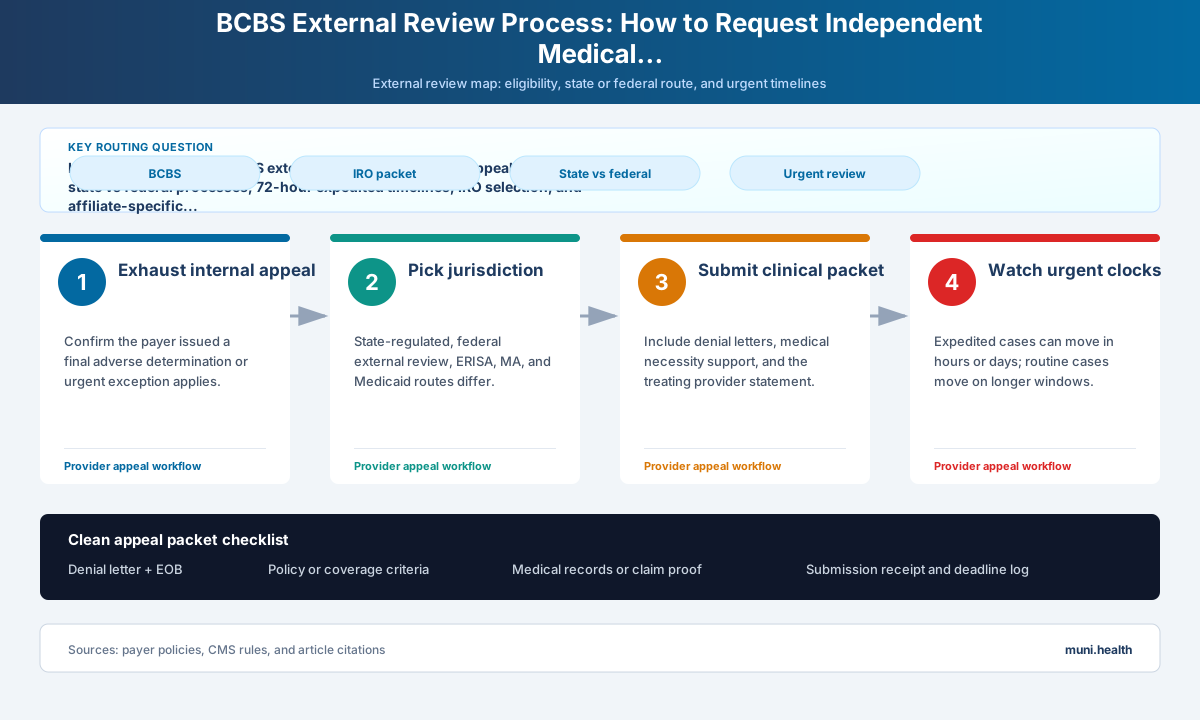
After exhausting BCBS internal appeals, you can request an independent external review through a state-certified or federally-designated Independent Review Organization (IRO). You generally have 4 months from the final internal denial notice to file. Standard decisions come within 60 days; expedited reviews — for urgent or ongoing care — must be decided within 72 hours. IRO decisions are binding on the plan.
What Is BCBS External Review?
External review is the final escalation step when a Blue Cross Blue Shield plan denies a claim and your internal appeals have failed. Instead of the insurer reviewing its own decision, an independent third-party organization — a certified IRO — evaluates the medical necessity or clinical judgment behind the denial.
The right to external review exists for most non-grandfathered health insurance plans under the ACA and, for self-funded ERISA plans, under rules issued by the Department of Labor effective July 1, 2011. BCBS operates as 36 independent affiliates across the country, so the specific external review pathway depends on whether the plan is state-regulated or self-funded.
Why External Review Matters
IRO decisions are binding on the plan — not just advisory. If the IRO overturns the denial, BCBS must cover the service, regardless of the insurer's original position. This distinguishes external review from a second-level internal appeal.
Who Can Request BCBS External Review?
External review is available when a BCBS plan issues an adverse benefit determination based on:
Prepare this appeal packet with your team.
Draft the appeal, coordinate missing documents, and approve the reviewed packet. Keep your clearinghouse; your practice checks deadlines and submits through the payer’s accepted channel.
First 3 appeals free, then $20 per appeal. Start with your denial letter or EOB and available records. No meeting or clearinghouse connection required.
- Medical necessity or appropriateness
- Healthcare setting or level of care
- Clinical effectiveness
- Experimental or investigational status of a service
External review does not apply to pure eligibility determinations — disputes about whether a person is covered under the plan at all. It also generally does not apply to grandfathered health plans.
Both providers (on behalf of the patient with written authorization) and members can initiate external review. For billing teams filing on behalf of a patient, ensure you have a signed authorization before submitting.
State-Regulated vs. ERISA Self-Funded Plans
BCBS covers individuals through two different regulatory frameworks, and each uses a distinct external review process.
| Plan Type | Regulatory Framework | External Review Process | Governing Rules |
|---|---|---|---|
| Fully insured individual/small group | State insurance law | State-assigned IRO program | State department of insurance + ACA minimum standards |
| Fully insured large group | State insurance law | State-assigned IRO program | State law + ACA minimums |
| Self-funded (ERISA) employer plan | Federal ERISA | Federal external review — DOL-designated IRO | DOL technical release 2010-01 and 2011-02 |
| Self-funded non-federal governmental plan | State or federal | Varies — check plan documents | May opt into state program |
If you are unsure which type of plan you are dealing with, check the summary plan description (SPD) or ask the plan administrator. The BCBS denial letter for ERISA plans should also reference DOL external review rights. For a broader overview of how IROs work across all payers — including eligibility rules, state vs. federal tracks, and how providers file — see the independent review organization appeal guide.
Standard vs. Expedited External Review
| Review Type | When to Use | Filing Window | IRO Decision Deadline |
|---|---|---|---|
| Standard external review | Non-urgent denials; post-service claim denials | Within 4 months of final internal denial notice | 60 days from IRO receiving complete request |
| Expedited external review | Urgent/emergent ongoing treatment; serious health risk if treatment is delayed | Simultaneous with or after filing expedited internal appeal | 72 hours from IRO receiving request |
Expedited Review: Don't Wait for Internal Appeal to Finish
For expedited external review, you can file simultaneously with the expedited internal appeal — you do not need to wait for the internal denial to be upheld first. Use this when continued treatment is medically urgent and delay poses a serious health risk.
How to Request BCBS External Review: Step by Step
Step 1: Confirm You Have Exhausted Internal Appeals (or Qualify for an Exception)
External review is generally available after you have exhausted all internal levels — usually a first-level reconsideration plus a second-level appeal, depending on the affiliate. You do not need to exhaust internal appeals first if:
- The internal appeal process has not been completed within required timeframes (i.e., the plan is late)
- The denial involves urgent or emergent care that cannot wait for internal resolution
- The plan waives the internal appeal exhaustion requirement
Step 2: Locate the External Review Request Instructions in Your Denial Letter
Every BCBS denial of a medical necessity determination must include notice of the right to external review, the name and contact information for the designated IRO (or the state process to request one), and the filing deadline. Review the most recent internal denial letter carefully — this is the authoritative source for the correct submission address and form for your specific affiliate.
Step 3: Complete the External Review Request Form
Most BCBS affiliates use a standard external review request form. The form typically requires:
- Member name, ID number, and plan name
- Claim or authorization number being disputed
- Description of the service denied
- Basis for the appeal (medical necessity, experimental, etc.)
- Contact information for the treating physician
- Authorization from the member (if provider is submitting)
Step 4: Gather Supporting Clinical Documentation
The IRO will review the plan's medical records alongside any supplemental documentation you submit. Strong submissions typically include:
- Treating physician's letter of medical necessity
- Relevant clinical guidelines (society guidelines, peer-reviewed studies)
- Patient-specific clinical records showing failed alternative treatments
- Any BCBS Clinical Guidelines or nationally recognized criteria cited in the denial
If you haven't yet submitted a formal internal appeal, review our BCBS appeal letter templates and BCBS denial appeal guide before moving to external review — a well-documented internal record strengthens your IRO submission.
Cite the Standards the Plan Used Against You
BCBS and its affiliates use medical necessity criteria such as MCG (formerly Milliman Care Guidelines) and their own affiliate-specific clinical policies. If the denial letter cites a specific guideline or clinical policy number, address it directly in your submission materials. The IRO will compare your clinical evidence against those same standards.
Step 5: Submit Within the Deadline
Filing deadlines matter. Under ACA minimum standards, members and providers have at least 4 months from the date of the final internal appeal denial notice to request standard external review. Some states have longer windows — check the denial letter and your state's insurance department rules for affiliate-specific requirements. For a broader view of insurer-specific internal appeal windows, see our insurance appeal deadlines guide.
For expedited external review, there is no separate pre-filing waiting period — submit as soon as the expedited internal request is denied or simultaneously with the internal expedited request if treatment is ongoing.
Step 6: IRO Review and Decision
Once the request is filed:
- The BCBS affiliate forwards relevant plan documents to the IRO within 5 business days (standard) or 1 business day (expedited) of assigning the case
- The IRO independently evaluates medical necessity using peer-reviewed criteria and clinical experts
- Standard decisions must be issued within 60 days of the IRO receiving the complete request
- Expedited decisions must be issued within 72 hours
The IRO's decision is sent simultaneously to you (or the member), the plan, and relevant state regulators.
Step 7: If the IRO Overturns the Denial
If the IRO reverses the adverse benefit determination, the plan must authorize or pay for the service. Compliance is not optional — the plan is legally bound by the decision.
If the IRO upholds the denial, you have limited further options within the insurance process. At that point, litigation under ERISA or state contract law is the remaining avenue, though the timeframes and standards differ significantly. See our insurance appeal statute of limitations guide for more on legal deadlines.
BCBS Affiliate-Specific Notes
BCBS operates as independent affiliates, and each has its own external review submission contacts. Key differences to know:
Prepare this appeal packet with your team.
Draft the appeal, coordinate missing documents, and approve the reviewed packet. Keep your clearinghouse; your practice checks deadlines and submits through the payer’s accepted channel.
First 3 appeals free, then $20 per appeal. Start with your denial letter or EOB and available records. No meeting or clearinghouse connection required.
State programs: Many states have established external review programs through their department of insurance. In these states, the external review request goes to the state, which assigns an accredited IRO. Affiliates in these states — such as BCBS of North Carolina, BCBS of Texas, and Anthem Blue Cross plans in California and elsewhere — participate in the state program for fully insured plans.
Federal process for ERISA plans: For self-funded employer plans, the external review follows the federal process under DOL rules. The plan selects an IRO from a list of federally-designated organizations. The IRO rotates to avoid repeated use of a single reviewer.
Confirm the right contact: Always use the submission address or portal listed in the denial letter — not a generic affiliate address. BCBS affiliate portals and forms are updated periodically, and the denial letter is the authoritative, current source.
Don't Use the Wrong Affiliate Address
BCBS has 36 independent affiliates. An external review request sent to the wrong address can miss the filing deadline. Use the specific contact information in your denial letter, not a generic BCBS website address.
How Muni Appeals Supports External Review Preparation
The documentation requirement for external review is higher than for a standard internal appeal. The IRO reviews clinical evidence independently, and a submission without organized records, guideline citations, and a clear clinical argument for reversal is a weaker case.
Muni Appeals helps billing teams compile uploaded clinical documentation, surface deadline risk, and organize a review-ready external-review packet. Staff verifies the IRO requirements, calendars the deadline, and submits directly.
Frequently Asked Questions
How long do I have to request BCBS external review?
Under ACA minimum standards, you have at least 4 months (approximately 180 days) from the date of the final internal appeal denial notice. Some BCBS affiliates and states may allow longer windows. The exact deadline is stated in the denial letter — check it immediately.
Can I skip the internal appeal and go straight to external review?
Generally, no. You must exhaust internal appeals first. The exceptions are: the plan failed to make a timely internal decision, the case involves urgent or ongoing treatment, or the plan explicitly waives the internal exhaustion requirement.
Who pays for the external review?
Under ACA requirements and most state laws, the plan pays the IRO's cost. You do not pay to request external review. Some states allow a nominal filing fee (often capped at $25), which is refunded if the IRO reverses the denial.
Is the IRO decision final?
The IRO decision is binding on the plan. If the IRO upholds the denial, you retain the right to pursue legal remedies — under ERISA for self-funded plans or state contract law for fully insured plans. Legal timelines vary by state and plan type.
What types of BCBS denials qualify for external review?
External review applies to adverse benefit determinations based on medical necessity, appropriateness, healthcare setting, effectiveness, or experimental/investigational status. Pure eligibility disputes — whether a person is covered at all — do not qualify.
What is the difference between an expedited appeal and expedited external review?
An expedited internal appeal is a faster version of the insurer's own internal review process, required when health is at serious risk. Expedited external review involves an independent IRO and must be decided within 72 hours. You can request both simultaneously for urgent ongoing care.
Can a provider request external review on behalf of a patient?
Yes. Providers can file on behalf of a member with written authorization. The external review request form typically includes a section for authorized representative information.
Ready to Challenge a BCBS Denial?
External review is the most powerful tool available after internal appeals fail — the IRO decision is binding and not subject to insurer reversal. The key is filing within the deadline with complete clinical documentation.
Get started:
- Confirm your filing deadline from the final denial letter
- Identify whether the plan is state-regulated or ERISA self-funded
- Compile clinical records, guideline citations, and physician documentation
- Use Muni Appeals to organize the packet, then track the filing and review directly with the IRO
This guide reflects the 2026 BCBS, ACA, and ERISA sources reviewed for publication. State requirements and affiliate processes vary. Verify current instructions and controlling rules before filing. This information is for administrative and billing purposes and is not medical or legal advice.