

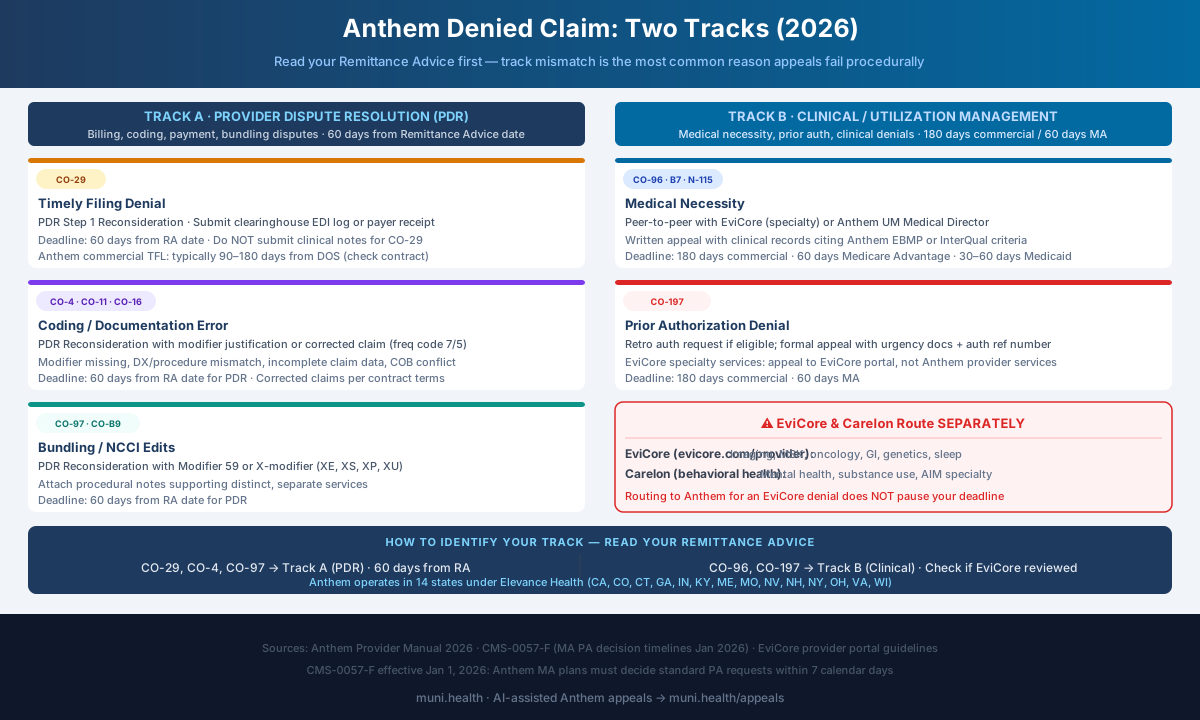
When Anthem Blue Cross denies a claim, identify the type from your Remittance Advice: billing or coding disputes go through the Provider Dispute Resolution (PDR) process — Step 1 Reconsideration within 60 days of your RA date, Step 2 Appeal within 60 days of the Step 1 decision. Medical necessity and prior authorization denials go through a separate Clinical/Utilization Management track. EviCore-managed specialty services require a separate appeal to EviCore, not Anthem. Medicare Advantage denials follow CMS timelines: 60 days from denial, with 7-day standard PA decisions effective January 1, 2026 under CMS-0057-F.
Why Anthem Denials Require a Track-Specific Response
Anthem Blue Cross Blue Shield — operating under Elevance Health in California, Colorado, Connecticut, Georgia, Indiana, Kentucky, Maine, Missouri, Nevada, New Hampshire, New York, Ohio, Virginia, and Wisconsin — processes two fundamentally different categories of denials. The most common reason an otherwise valid appeal fails with Anthem is track mismatch: submitting a medical necessity denial through the PDR claims dispute form, or attempting a billing dispute through the UM clinical review pathway.
Understanding the denial type from your Remittance Advice before you file anything is the single most effective way to protect your deadline and avoid a procedural denial.
Anthem's denial landscape also includes a third complication: EviCore healthcare manages prior authorization and clinical review for specialty imaging, musculoskeletal services, oncology, GI, genetics, and sleep studies across many Anthem commercial and Medicare Advantage plans. Denials from EviCore must be appealed directly to EviCore — not to Anthem — even though the Anthem plan name appears on the insurance card. Carelon Medical Benefits Management (formerly AIM Specialty Health) handles behavioral health authorization and some specialty review categories. Each has its own peer-to-peer process and written appeal address.
This guide maps each Anthem denial category to the correct response path with action steps, code references, deadlines, and 2026-specific updates. For the full Anthem step-by-step appeal strategy — peer-to-peer timing, InterQual citation technique, and MA escalation ladder — see the complete Anthem appeal guide.
For context on how Anthem's denial rates compare to other major insurers, see the insurance denial rate comparison by company.
The Five Anthem Denial Categories
| Denial Category | Common Codes | Primary Cause | Action Path | Deadline |
|---|---|---|---|---|
| Medical Necessity | CO-96, B7, N-115 | Clinical documentation does not meet Anthem's Evidence-Based Medical/Utilization Policies (EBMPs), InterQual criteria, or EviCore clinical criteria for the service | Peer-to-peer review with EviCore (specialty) or Anthem UM Medical Director (standard); written clinical appeal with records, physician narrative, and direct policy citations; route EviCore denials to EviCore, not Anthem | 180 days from denial (commercial); 60 days (Medicare Advantage); 30–60 days (Medicaid — verify by state) |
| Prior Authorization | CO-197 | Auth not obtained before service, authorization expired, or billed service differed from authorized code, site, or unit count; EviCore specialty services require separate auth | Retroactive auth request (if plan permits); formal appeal with clinical urgency documentation, auth reference number, and code-match verification; EviCore denials appeal to EviCore portal | 180 days from denial (commercial); 60 days (MA) |
| Timely Filing | CO-29 | Claim received after the contractual filing window — typically 90–180 days from date of service for commercial (check your Anthem contract) | PDR Reconsideration with clearinghouse transmission log, EDI acknowledgment, or payer receipt confirmation proving timely submission; eligibility or enrollment issue documentation if applicable | 60 days from RA date for Step 1 PDR Reconsideration |
| Coding / Documentation | CO-4, CO-11, CO-16, CO-22, CO-B7 | Modifier missing or incorrect, incomplete claim data, diagnosis-to-procedure mismatch, or coordination of benefits conflict | Corrected claim resubmission (frequency code 7 or 5) for technical errors; PDR Reconsideration with modifier justification or supporting documentation for non-technical disputes | 60 days from RA date for PDR; corrected claims per contract terms |
| Bundling / NCCI | CO-97, CO-B9 | Claim includes a code pair subject to CMS NCCI edits or Anthem-specific bundling policies | PDR Reconsideration with Modifier 59 or X-modifier (XE, XS, XP, XU) to establish a distinct service; attach procedural notes supporting the separate service | 60 days from RA date for PDR |
Prepare this appeal packet with your team.
Draft the appeal, coordinate missing documents, and approve the reviewed packet. Keep your clearinghouse; your practice checks deadlines and submits through the payer’s accepted channel.
First 3 appeals free, then $20 per appeal. Start with your denial letter or EOB and available records. No meeting or clearinghouse connection required.
Step 1: Read Your Anthem Remittance Advice Before Acting
Every Anthem Explanation of Benefits or Remittance Advice contains the information needed to route the denial correctly:
- Claim Adjustment Reason Code (CARC) — identifies the primary reason for denial or adjustment. CO-96 points to medical necessity; CO-197 points to prior authorization; CO-29 points to timely filing; CO-4 or CO-16 points to billing or coding.
- Remittance Advice Remark Code (RARC) — adds context, often identifying the specific Evidence-Based Medical/Utilization Policy applied or what documentation is missing.
- Group code — CO (contractual obligation, Anthem's responsibility), PR (patient responsibility), OA (other adjustment).
- Appeal deadline — stated on the denial letter; do not estimate from general rules when your Anthem contract may specify a different window.
- Reviewing entity — the denial letter or RA will identify whether Anthem, EviCore, or Carelon issued the denial. This determines where the appeal must go.
EviCore and Carelon Denials Route Separately
If the denial letter identifies EviCore as the reviewing entity, the peer-to-peer request and written appeal must go to EviCore at evicore.com/provider — not to Anthem's provider services line. Carelon behavioral health denials similarly require appeal to Carelon. Routing to the wrong entity delays the decision and does not pause your deadline.
Step 2: PDR-Track Denials — Billing, Coding, and Timely Filing
The Provider Dispute Resolution process applies to payment disputes and administrative claim errors. It does not handle medical necessity or prior authorization decisions.
Timely Filing (CO-29)
Anthem will deny a claim as untimely if it is received outside the filing window specified in your provider contract. For commercial and Medicare Advantage plans, Anthem standardized to a 90-day window from date of service effective October 2019 — shorter than most other commercial payers. Federal Employee Program (FEP) claims administered through Anthem follow BCBSA national rules and have a 365-day window. For the full breakdown by plan type, affiliate, and exception rules, see the Anthem timely filing limits guide.
To appeal a timely filing denial:
- Locate your clearinghouse transmission log or EDI acknowledgment showing the claim submission date and Anthem's acceptance confirmation.
- Obtain a payer-issued receipt or proof of timely acknowledgment if available.
- Submit a Step 1 Reconsideration through Availity Essentials (preferred) or fax/mail with the Provider Dispute Resolution Form attached.
- If the denial resulted from an enrollment or eligibility issue (e.g., the patient's coverage was retroactively terminated), include the retroactive eligibility documentation.
Filing the appeal within 60 days of your Remittance Advice date preserves your Step 1 window. Step 2 is available within 60 days of the Step 1 decision if you need to escalate.
Coding and Modifier Disputes (CO-4, CO-11, CO-16)
Anthem applies NCCI edits and its own claim edits that can deny claims for modifier omissions, diagnosis-to-procedure mismatches, or incomplete claim data:
- CO-4: A modifier is required for this procedure. Add the appropriate modifier (Modifier 25, 59, or an X-modifier) and resubmit. If the original claim was submitted correctly and was denied in error, use the PDR Reconsideration with operative notes or procedure documentation to support the modifier.
- CO-11: The procedure is inconsistent with the diagnosis on the claim. Review the ICD-10 code for accuracy and, if the diagnosis was correct, submit the PDR Reconsideration with clinical documentation supporting the code combination.
- CO-16: Claim information is missing or incomplete. If the submitted billing information needs correction, confirm the applicable replacement-claim process and deadline. See the Anthem corrected-claim guide for scoped Medicaid examples and a deadline-verification worksheet; do not apply one Anthem policy nationwide.
Bundling Denials (CO-97, CO-B9)
NCCI bundling denials indicate that Anthem's system flagged two codes as components of a single service. Appeal using Modifier 59 or the appropriate X-modifier to establish that the services were:
- XE: Separate encounter
- XS: Separate structure (anatomical site)
- XP: Separate practitioner
- XU: Unusual non-overlapping service
Attach operative or procedural notes that clearly document the separate nature of each service.
Submission: PDR Track
| Channel | How to Access | Best For | Notes |
|---|---|---|---|
| Availity Essentials (preferred) | Availity Essentials → Transactions → Provider Dispute Resolution | All PDR disputes; fastest acknowledgment and tracking | Real-time submission confirmation; preferred for all states |
| Fax (state-specific) | Number on denial letter or Anthem provider manual for your state | Urgent disputes when Availity access is unavailable | Include the Provider Dispute Resolution Form as a cover sheet; confirm receipt within 24 hours |
| Mail (California) | P.O. Box 60007, Los Angeles CA 90060-0007 | California commercial PDR submissions when fax or Availity not available | Certified mail recommended; allow additional transit time against 60-day deadline |
| Mail (other states) | State-specific PO Box on denial letter or Anthem provider manual | Non-CA states when Availity is unavailable | Check your denial letter for the correct state routing address |
Step 3: Clinical-Track Denials — Medical Necessity and Prior Authorization
Medical Necessity (CO-96, B7)
Anthem applies two clinical review frameworks for medical necessity decisions:
- Evidence-Based Medical/Utilization Policies (EBMPs): Anthem's primary clinical coverage guidelines, published on anthem.com for most commercial and Medicare Advantage plans.
- InterQual: Used for inpatient level-of-care decisions (appropriate admission level, SNF vs. home health transitions) in most Anthem markets.
- MCG Care Guidelines: Used by Carelon Medical Benefits Management for behavioral health and mental health services.
When Anthem denies for medical necessity, the denial letter should cite the specific EBMP or InterQual criterion that was not met. Locate that criterion before drafting the appeal.
If EviCore issued the denial:
EviCore manages specialty imaging, MSK, oncology, GI, genetics, and sleep studies. If the denial letter references EviCore, the response process is:
- Request a peer-to-peer review with the EviCore medical director — call the number on the EviCore denial letter, or use the EviCore provider portal at evicore.com/provider. The treating physician must conduct this call.
- If the peer-to-peer does not result in reversal, file a written appeal through the EviCore provider portal or fax. Include clinical records, the physician's narrative with direct citations to the EviCore clinical criteria that were allegedly not met, and any published clinical guidelines (AMA, specialty society, or Medicare LCDs) supporting the service.
If Anthem directly issued the denial:
- Identify the Anthem EBMP cited in the denial letter. Review the criteria that were not met.
- Request a peer-to-peer review with Anthem's Medical Director via the fax number on the denial letter.
- File a written clinical appeal through Availity Essentials or by fax/mail. Include: the physician's clinical narrative, the relevant medical records, and direct citations to the Anthem EBMP criteria language supporting coverage.
Peer-to-Peer Timing Matters
For concurrent clinical denials (during an active inpatient stay or ongoing authorized service), request the peer-to-peer immediately — before the authorization period ends. For post-service medical necessity denials, peer-to-peer is typically available within the first 30 days of the denial date.
Prior Authorization (CO-197)
A CO-197 denial means the service was performed without authorization, with an expired authorization, or with a code mismatch between what was authorized and what was billed.
Immediate actions:
- Authorization not obtained: Check whether a retroactive authorization is available under your Anthem contract (not available for all services; urgent/emergent exceptions may apply). If not available, file a clinical appeal with documentation of medical necessity and, if applicable, evidence that the authorization requirement was not properly communicated at the point of service.
- Authorization obtained but denied at billing: Review the authorized code, dates, site, and unit count against what was billed. A code or site mismatch requires a corrected authorization request or an administrative appeal with the original auth reference number.
- EviCore or Carelon managed the auth: The denial must be appealed to EviCore or Carelon, not to Anthem's provider services line.
Anthem Medicare Advantage Denied Claims (2026)
Anthem Medicare Advantage plans follow CMS Part C and Part D appeal rules, which differ from commercial plan timelines and escalation paths.
Key 2026 changes under CMS-0057-F (effective January 1, 2026):
- Standard prior authorization decisions: 7 calendar days from receipt of all necessary information.
- Expedited prior authorization decisions: 72 hours for urgent requests.
- Denial notices must include specific patient-specific reasons for the denial — generic criteria citations no longer satisfy CMS requirements.
- Anthem must proactively initiate expedited review if a patient's health could be seriously harmed by the standard timeframe.
Anthem MA appeal deadlines (CMS Part C):
- Level 1 (Anthem reconsideration): 60 days from the denial date.
- Level 2 (Independent Review Entity — C2C Innovative Solutions effective May 1, 2026; Maximus Federal Services handled requests received through April 30, 2026 — if Anthem misses the 7-day deadline): auto-escalation required by CMS rules.
- Level 3 (OMHA Administrative Law Judge): when amount in controversy exceeds $200.
- Level 4 (Medicare Appeals Council / DAB): when ALJ decision is challenged.
- Level 5 (Federal District Court): when amount in controversy exceeds $1,960 (CY2026 threshold).
Auto-Escalation Under CMS-0057-F
If Anthem fails to meet the 7-day standard PA deadline or 72-hour expedited deadline for a Medicare Advantage authorization decision, CMS requires the request to be auto-escalated to the independent review entity — C2C Innovative Solutions, effective for requests received on or after May 1, 2026 (Maximus Federal Services previously held this role through April 30, 2026). Document the submission date and track the decision date carefully — this right belongs to you and the patient even if Anthem does not proactively initiate the escalation.
How Muni Appeals Streamlines Anthem Denied Claims
Anthem denials require accurate track identification, timely submission through the correct channel (Availity, EviCore portal, or Carelon), and documentation that directly addresses the specific EBMP, InterQual, or EviCore criterion cited in the denial.
Prepare this appeal packet with your team.
Draft the appeal, coordinate missing documents, and approve the reviewed packet. Keep your clearinghouse; your practice checks deadlines and submits through the payer’s accepted channel.
First 3 appeals free, then $20 per appeal. Start with your denial letter or EOB and available records. No meeting or clearinghouse connection required.
Muni Appeals helps billing teams:
- Suggest a likely response track from the uploaded Anthem Remittance Advice codes for staff verification
- Compile clinical records, physician narratives, and EBMP or InterQual policy citations needed for clinical appeals
- Surface PDR reconsideration and appeal deadline risk for staff verification and calendaring
- List the EviCore peer-to-peer and written-appeal steps staff should verify, schedule, and submit
- Provide Medicare Advantage escalation guidance for staff to verify against the current plan and denial notice
Frequently Asked Questions
What is the difference between a PDR reconsideration and a clinical appeal with Anthem?
A Provider Dispute Resolution (PDR) reconsideration handles billing and coding disputes — underpayments, modifier denials, timely filing issues, bundling errors. A clinical appeal handles medical necessity, prior authorization, and level-of-care decisions. Both use different forms, go to different teams, and have different timelines. Filing the wrong type for your denial type is the most common procedural error.
How long do I have to dispute an Anthem denied claim?
For PDR-track (billing and coding) disputes, you have 60 days from your Remittance Advice date to file the Step 1 Reconsideration. For clinical-track denials (commercial plans), you typically have 180 days from the denial date. For Medicare Advantage, CMS Part C rules allow 60 days. Check your denial letter for the exact deadline — contract terms and state regulations can affect both commercial and Medicaid windows.
Do I submit an EviCore denial to Anthem or directly to EviCore?
Directly to EviCore. When EviCore issues the denial for a specialty service (imaging, MSK, oncology, sleep, GI, genetics), the appeal — including the peer-to-peer request — must go to EviCore at evicore.com/provider. Anthem routes EviCore denials to EviCore when correctly submitted, but sending to Anthem's general provider services line causes routing delays.
How do I submit an Anthem appeal through Availity?
Log in to Availity Essentials, navigate to Transactions, then select Provider Dispute Resolution. Select the claim, attach supporting documentation, and submit. Availity provides real-time confirmation and tracking. For clinical appeals (medical necessity), use the clinical appeal form specific to your Anthem state plan, not the standard PDR form.
What are the most common Anthem denial codes?
The most common Anthem denial codes are CO-96 (not medically necessary), CO-197 (prior authorization required or not obtained), CO-29 (timely filing expired), CO-4 (modifier required), CO-97 (bundling — service included in another procedure), and CO-16 (claim information missing or incomplete). CO-96 and CO-197 route to the clinical track; the others route to PDR.
What happens if Anthem misses the Medicare Advantage appeal deadline?
Under CMS Part C rules and CMS-0057-F (effective January 1, 2026), if Anthem fails to meet the 7-day standard or 72-hour expedited PA decision deadline, the request auto-escalates to the independent review entity — C2C Innovative Solutions, which took over the Part C IRE contract from Maximus Federal Services for requests received on or after May 1, 2026 (Maximus continued processing requests received through April 30, 2026). You have the right to notify CMS or contact the IRE directly if Anthem does not initiate the escalation.
Does ERISA affect Anthem appeals for self-funded employer plans?
Yes. Employees enrolled in a self-funded (ASO) employer plan are covered by ERISA, not state insurance law. This means state external review laws — including California's DMHC Independent Medical Review — do not apply to self-funded Anthem ASO plans. After exhausting Anthem's internal appeals, the next step for a self-funded plan is the federal external review process under ERISA, not the state insurance commissioner.
Can I submit a corrected claim instead of a formal appeal for coding errors?
A correction may be appropriate when the submitted billing information is wrong. If the claim is accurate and you dispute its adjudication, identify the applicable reconsideration or appeal route. Confirm the deadline for that specific plan and process; the Anthem corrected-claim guide explains why a nationwide 365-day rule cannot be inferred from a state Medicaid policy.
Ready to Recover Anthem Denied Claims?
Anthem denials involve two separate appeal tracks, EviCore and Carelon routing for specialty services, and different deadline structures for commercial versus Medicare Advantage plans. The decision you make in the first 60 days — which track, which portal, which documentation — determines whether the appeal is recoverable.
Get Started:
- Identify track from Remittance Advice codes before submitting anything
- PDR for billing and coding disputes; clinical track for medical necessity and prior auth
- EviCore denials route to EviCore; Carelon denials route to Carelon
- Medicare Advantage: 60-day deadline, CMS-0057-F auto-escalation rights apply
This guide reflects the 2026 Anthem sources reviewed for publication. Plan-specific terms, state regulations, and federal rules may affect the process. Verify the current denial notice, payer instructions, and controlling plan terms before filing.