

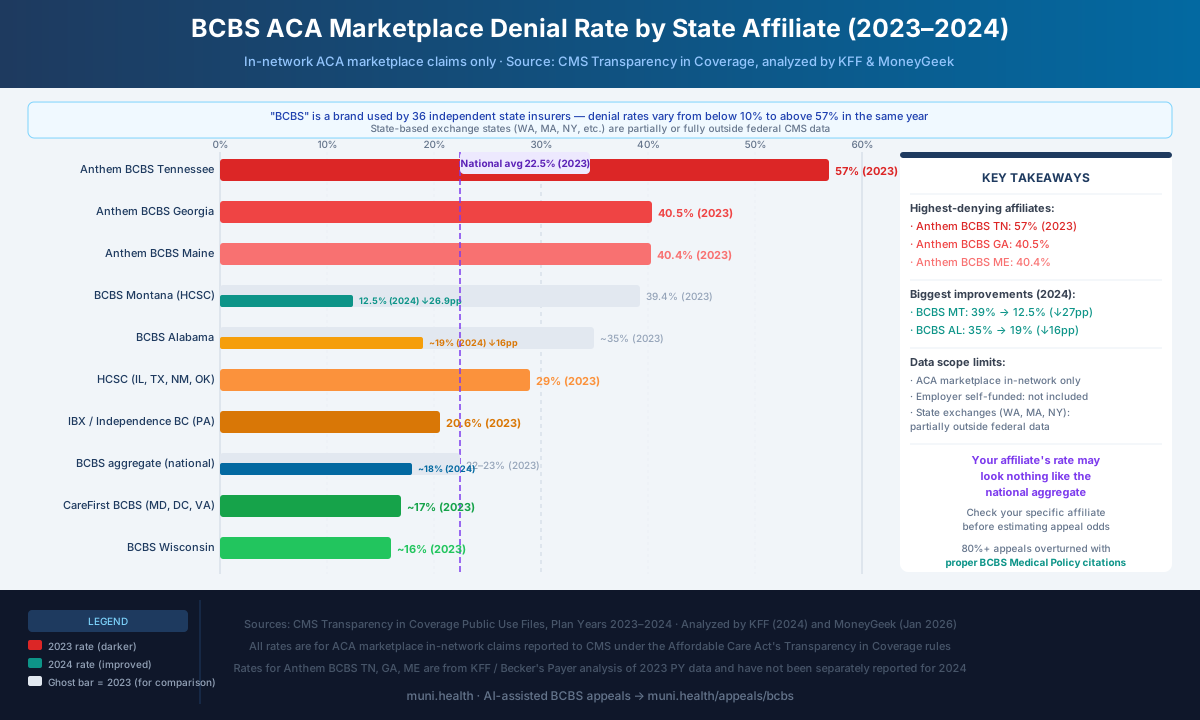
Blue Cross Blue Shield is not one company — it is 36 independent state affiliates, and their denial rates vary dramatically. BCBS Alabama denied approximately 35% of ACA marketplace claims in Plan Year 2023, the highest rate of any large-volume insurer nationally. Anthem BCBS of Tennessee reached 57%. By 2024, some affiliates improved sharply: BCBS Montana dropped from 39% to 12.5%. The national BCBS aggregate was approximately 18% in 2024 — but your state affiliate's rate may look nothing like that.
Why BCBS Denial Rates Vary So Much
"Blue Cross Blue Shield" is a brand licensed to 36 independent, separately operated insurers across the United States. Each affiliate sets its own clinical policies, prior authorization requirements, and claims adjudication rules. A provider billing BCBS Alabama faces a materially different administrative environment than one billing CareFirst in Maryland or Premera Blue Cross in Washington.
This structural fragmentation means there is no single "BCBS denial rate." When national reports aggregate BCBS affiliates, they obscure a range from below 10% to above 57% in the same reporting year.
The primary data source for this analysis is CMS Transparency in Coverage public use files for ACA marketplace plans sold on HealthCare.gov, analyzed by KFF (Plan Year 2023, published late 2024) and MoneyGeek (Plan Years 2023–2024, published January 2026). This data covers in-network claims only for federal exchange states. State-operated exchange states — including Washington (Premera Blue Cross), Massachusetts (BCBS MA), New York (Excellus), and Pennsylvania (Independence Blue Cross, which uses Pennie) — are partially or fully outside these datasets.
Data Scope
All denial rates below are for in-network ACA marketplace claims reported to CMS under the Affordable Care Act's Transparency in Coverage rules. They do not include employer-sponsored plans, self-funded plans, or Medicaid managed care. Medicare Advantage prior authorization denial rates follow a separate reporting framework and are addressed separately.
BCBS Affiliate Denial Rates by State (2023–2024)
The table below lists BCBS affiliates with publicly reported or analyzed ACA marketplace denial rate data. Affiliates absent from this table either operate on state-based exchanges not included in federal CMS data, or their state-level rates have not been separately reported in accessible public analyses.
Prepare this appeal packet with your team.
Draft the appeal, coordinate missing documents, and approve the reviewed packet. Keep your clearinghouse; your practice checks deadlines and submits through the payer’s accepted channel.
First 3 appeals free, then $20 per appeal. Start with your denial letter or EOB and available records. No meeting or clearinghouse connection required.
| Affiliate | State(s) | 2023 Denial Rate | 2024 Denial Rate | Source |
|---|---|---|---|---|
| Anthem BCBS Tennessee | TN | ~57% | Not separately reported | KFF / Becker's Payer |
| Anthem BCBS Georgia | GA | ~40.5% | Not separately reported | KFF / Becker's Payer |
| Anthem BCBS Maine | ME | ~40.4% | Not separately reported | KFF / Becker's Payer |
| BCBS Montana (HCSC) | MT | 39.4% | 12.5% (−27 pp) | MoneyGeek (CMS TiC PY2024) |
| BCBS Alabama | AL | ~35% | ~19% (−16 pp) | KFF (2023), MoneyGeek (2024) |
| HCSC aggregate (IL, TX, NM, OK) | IL/TX/NM/OK | 29% | Not separately reported | KFF 2023 analysis |
| IBX / Independence BC (Keystone) | PA | 20.6% | Not separately reported | Philadelphia Inquirer (Oct 2024) |
| National average (all ACA insurers) | HealthCare.gov states | 22.5% | 19.1% | KFF / MoneyGeek |
| BCBS aggregate (all affiliates) | National | ~22–23% range | ~18% | MoneyGeek (CMS TiC PY2024) |
| CareFirst BCBS | MD, DC, VA | ~17% | Not separately reported | WYPR / Baltimore Sun (Dec 2024) |
| BCBS Wisconsin | WI | ~16% | Not separately reported | KFF working files |
Sources: CMS Transparency in Coverage Public Use Files, Plan Years 2023–2024. Analyzed by KFF and MoneyGeek. ACA marketplace in-network claims only. State-based exchange states (WA, MA, NY, etc.) not reflected in federal data.
The Highest-Denying BCBS Affiliates
Anthem BCBS Affiliates: Tennessee, Georgia, Maine
KFF's 2023 analysis identified seven plans with among the highest denial rates nationally — and according to Becker's Payer reporting on the underlying data, all seven were Anthem or BCBS-affiliated companies. Anthem BCBS of Tennessee denied approximately 57% of in-network ACA marketplace claims in Plan Year 2023. Anthem BCBS of Georgia (40.5%) and Anthem BCBS of Maine (40.4%) were close behind.
Anthem Inc. (now Elevance Health) operates BCBS-licensed plans in 14 states. Its individual affiliates can vary substantially: the company's aggregate Medicare Advantage prior authorization denial rate was 4.2% in 2023 — the lowest among major MA insurers tracked by KFF — while its ACA marketplace affiliates in some states were among the highest nationally.
Anthem vs. BCBS Distinction
Anthem/Elevance Health operates under the BCBS license in 14 states. When you see "BCBS" in a state like Tennessee, Georgia, Indiana, or Virginia, that plan is an Anthem-operated subsidiary, not an independently governed BCBS licensee. Their clinical policies, prior authorization criteria, and appeals processes align more with Anthem corporate standards than with other independent BCBS plans.
BCBS Alabama
BCBS Alabama's ~35% denial rate for Plan Year 2023 was the highest of any large-volume insurer nationally, per KFF analysis. BCBS Alabama disputed this characterization, arguing the methodology included claims that were ultimately paid on appeal — an accounting difference that affects how "denial" is defined but does not change the initial claim rejection rate that providers experience.
By 2024, BCBS Alabama's rate had dropped to approximately 19% — a meaningful improvement of roughly 16 percentage points. The reasons for that shift have not been publicly explained by BCBS Alabama, but the magnitude suggests a policy or adjudication process change rather than statistical variation.
For providers still billing BCBS Alabama, a 19% in-network denial rate remains above the national average of 19.1% — and the historical context suggests scrutiny of administrative denial patterns is warranted.
HCSC: The Largest Independent BCBS Licensee
Health Care Service Corporation (HCSC) is the largest independent (non-Anthem) BCBS licensee in the United States, operating plans in Illinois, Montana, New Mexico, Oklahoma, and Texas. As an aggregate entity, HCSC reported a 29% denial rate in Plan Year 2023 per KFF — making it the third-highest among insurers with large claim volumes.
The HCSC aggregate figure is influenced significantly by BCBS Montana, which had a 39.4% denial rate in 2023 before improving to 12.5% in 2024 — the largest single-year improvement of any insurer nationally in the MoneyGeek analysis of CMS data. That 27 percentage point decline is an unusual data point suggesting a structural change in how BCBS Montana processed or reported claims in 2024.
For providers billing BCBS Illinois or BCBS Texas specifically, their plan-level denial rates within the HCSC corporate structure are not separately available in the federal public use files as of this writing.
Independence Blue Cross (Pennsylvania)
IBX's Keystone Health Plan East — the primary individual-market product — denied 20.6% of in-network claims in Plan Year 2023, the highest rate in Pennsylvania, per Philadelphia Inquirer reporting on CMS data (October 2024). The state average for Pennsylvania was 13.8%. IBX holds significant market share in the Philadelphia region.
This is a notable gap from the state average. Practices billing IBX in eastern Pennsylvania face meaningfully higher administrative denial volume than those billing other carriers in the same market.
Affiliates Near or Below the National Average
CareFirst BCBS (Maryland, D.C., Virginia)
CareFirst — the BCBS licensee for Maryland, the District of Columbia, and northern Virginia — reported approximately 17% in-network ACA marketplace claim denials in 2023, per WYPR and Baltimore Sun reporting on CMS data. Maryland's state average was approximately 16–17%.
CareFirst holds roughly 55% market share for insured lives in Maryland. At 17%, it is near the national baseline but above Kaiser Permanente's approximately 7% rate in the same state, according to the same reporting.
BCBS Wisconsin
BCBS of Wisconsin's denial rate was approximately 16% in 2023 per KFF working data — below the national average of 22.5% that year. Within the state, denial rates ranged from 7% to 27% across different BCBS Wisconsin plan products, illustrating that even within a single affiliate, the specific plan product matters.
BCBS Montana: The Largest Improvement Nationally
BCBS Montana's decline from 39.4% (2023) to 12.5% (2024) is the most significant year-over-year denial rate change among any insurer in the MoneyGeek analysis of CMS data published January 2026. A 27 percentage point drop in 12 months is inconsistent with gradual policy refinement — it suggests a fundamental change in claims adjudication approach, processing methodology, or how denials were categorized and reported.
BCBS Montana's 2024 rate of 12.5% is now below the national average of 19.1%, a near-reversal of its 2023 standing. Providers billing BCBS Montana should not extrapolate 2023-era administrative burden into 2024 and 2025 decisions — but verifying what changed is worth the call to the provider relations line.
What Changed From 2023 to 2024?
The 2024 CMS Transparency in Coverage data (published January 2026 via MoneyGeek) shows a national improvement from 22.5% to 19.1% — a 3.4 percentage point decline that is the largest year-over-year improvement in the dataset's history.
BCBS affiliates broadly followed this trend, with the aggregate moving from approximately 22–23% to 18%. Two affiliates stand out for the magnitude of improvement:
- BCBS Montana: 39.4% → 12.5% (−27 pp) — largest improvement of any insurer nationally
- BCBS Alabama: ~35% → ~19% (−16 pp) — second largest among BCBS affiliates tracked
The systemic drivers appear to include increased regulatory scrutiny following high-profile denial controversies in 2024, policy adjustments to prior authorization requirements, and improvements in administrative processing to reduce technical denials. No BCBS affiliate has publicly attributed its improvement to a specific policy change.
2024 Data Context
The 2024 improvements are real but may be partially attributable to methodological shifts in how some insurers classify and report denied claims. Plans that dispute the "denial" methodology (as BCBS Alabama has) may show larger statistical improvements when they adjust their reporting approach — without a corresponding improvement in the provider's day-to-day experience.
State Affiliates Without Separate Public Data
Several major BCBS affiliates do not appear in federal CMS Transparency in Coverage public data because their primary markets are on state-operated exchanges:
| Affiliate | State | Reason Data Is Limited | |---|---|---| | Premera Blue Cross | Washington, Alaska | Washington uses WA Healthplanfinder (state exchange) | | BCBS Massachusetts | Massachusetts | MA uses the Health Connector (state exchange) | | Excellus BCBS | Upstate New York | NY uses NY State of Health (state exchange) | | Florida Blue | Florida | Participates on HealthCare.gov; state-specific rate not separately available in public analyses | | BCBS North Carolina | North Carolina | State-level rate not separately reported in public KFF/MoneyGeek data |
For these affiliates, denial rate data must be obtained directly from state insurance commissioner reports, state exchange annual reports, or the insurer's provider relations publications.
Florida Blue is a particularly notable gap: Florida overall shows one of the widest intra-state denial rate ranges nationally (8% to 49% across plans in 2024), but Florida Blue's specific rate is not disaggregated in public federal data summaries.
How to Appeal a BCBS Denial
Despite the wide variation in BCBS affiliate denial rates, the appeal rights and process structure are governed by the ACA for marketplace plans and by ERISA for employer plans. The affiliate-specific differences are in timelines, submission methods, and clinical criteria — not in the fundamental right to appeal.
Key federal deadlines for ACA marketplace plans:
- Internal appeal: you have at least 180 days from receiving the denial to file
- Expedited appeal (urgent care): plan must respond within 72 hours
- External review: available after exhausting internal appeals
BCBS affiliates implement these federal minimums differently. Some affiliates process appeals regionally; others route to national centers. For Anthem-operated BCBS plans (TN, GA, ME, and others), the Availity portal is typically the primary provider-facing interface for claim disputes.
For building a strong appeal against any BCBS affiliate:
- Request the full denial reason in writing, including the specific clinical criteria applied
- Reference the affiliate's publicly available coverage determination guidelines (CDGs) — Anthem-operated plans publish CDGs that parallel UHC's CPDs
- Cite peer-reviewed literature where the CDG points to medical necessity standards
- Document the peer-to-peer review conversation if you requested one
The BCBS appeal letter template 2026 covers the standard format and required elements for appeal submissions across affiliates. For Premera Blue Cross specifically, see the Premera Blue Cross appeal guide 2026. For Florida Blue, see the Florida Blue appeal letter template 2026. Timely filing deadlines and appeal windows vary significantly by BCBS affiliate — see the BCBS timely filing limits 2026 guide for verified deadlines by plan.
Medicare Advantage Denial Rates by BCBS Affiliate
MA prior authorization denial data is reported differently from ACA marketplace claims. KFF tracks this at the insurer level for the largest MA plans.
Prepare this appeal packet with your team.
Draft the appeal, coordinate missing documents, and approve the reviewed packet. Keep your clearinghouse; your practice checks deadlines and submits through the payer’s accepted channel.
First 3 appeals free, then $20 per appeal. Start with your denial letter or EOB and available records. No meeting or clearinghouse connection required.
The BCBS entity with the largest MA enrollment nationally is Anthem/Elevance Health. Its MA prior authorization denial rate was 4.2% in 2023 — the lowest of the major MA insurers tracked by KFF. This stands in sharp contrast to Anthem's high ACA marketplace denial rates in some states, suggesting that MA prior authorization criteria and ACA claims adjudication operate quite differently within the same corporate family.
BCBS-affiliated MA plans outside of Anthem (e.g., HCSC, BCBS Alabama, Florida Blue) are not separately broken out in publicly available MA prior authorization denial rate summaries. If your practice is billing a specific BCBS MA plan, the relevant denial rate must be obtained directly from the plan's quality reporting or state insurance filings.
How Muni Appeals Handles BCBS Affiliate Variation
The 36-affiliate structure of BCBS is the core operational challenge for billing teams. An appeal template that works for CareFirst will not address the same clinical criteria, form requirements, or submission pathway as Anthem BCBS of Tennessee or BCBS Alabama.
Muni Appeals builds insurer-specific appeal workflows that account for affiliate-level differences in:
- Clinical policy documentation requirements
- Submission channels (portal, fax, mail) by affiliate
- Peer-to-peer review request procedures
- Escalation paths when internal appeals are denied
Frequently Asked Questions
What is the BCBS denial rate?
The national BCBS aggregate denial rate was approximately 18% for ACA marketplace in-network claims in Plan Year 2024, per MoneyGeek's analysis of CMS Transparency in Coverage data. However, individual affiliates ranged from below 10% to above 40% in the same year. The aggregate figure is not useful for predicting any specific affiliate's performance.
Which Blue Cross Blue Shield plan denies the most claims?
Anthem BCBS of Tennessee denied approximately 57% of ACA marketplace in-network claims in Plan Year 2023 — the highest of any BCBS affiliate with available public data. BCBS Alabama (~35%) and Anthem BCBS of Georgia (~40.5%) were also among the highest nationally. By Plan Year 2024, BCBS Alabama had improved to approximately 19%, though Anthem affiliate-specific 2024 data is not separately reported in public analyses.
Does Blue Cross Blue Shield deny a lot of claims?
At the national aggregate level, BCBS affiliates deny approximately 18% of in-network ACA marketplace claims — slightly below the national average of 19.1% in Plan Year 2024. However, this average conceals enormous variation: some affiliates deny at half the national rate, while others have historically denied at nearly three times the average. Whether BCBS "denies a lot" depends entirely on which state affiliate your practice contracts with.
Why is BCBS Alabama's denial rate so high?
BCBS Alabama's approximately 35% denial rate in Plan Year 2023 was the highest of any large-volume insurer nationally per KFF analysis. BCBS Alabama disputed the methodology, arguing that paid-on-appeal claims were included in the denominator in a way that inflated the apparent denial rate. By 2024, the reported rate had dropped to approximately 19%. Whether this reflects a genuine process improvement or a change in reporting methodology has not been publicly clarified by the plan.
Are BCBS appeal rates different by state?
Yes. Each BCBS affiliate sets its own internal appeal timelines (within federal minimums), submission requirements, and clinical criteria. Anthem-operated BCBS plans (14 states) use Anthem's Coverage Determination Guidelines. HCSC-operated plans (IL, TX, MT, NM, OK) use different criteria. The federal minimum appeal rights are uniform — 180 days for marketplace plans, 72 hours for expedited appeals — but the practical process varies significantly by affiliate.
Does BCBS North Carolina have a high denial rate?
BCBS North Carolina's specific ACA marketplace denial rate is not separately available in the federal CMS public data summaries reviewed for this article. North Carolina uses the HealthCare.gov federal exchange, so BCBS NC should be included in federal data, but the plan has not been cited separately in major public analyses. Contact the BCBS NC provider relations line or the NC Department of Insurance for state-specific data.
What happened to BCBS Montana's denial rate?
BCBS Montana's ACA marketplace denial rate dropped from 39.4% in Plan Year 2023 to 12.5% in Plan Year 2024 — a 27 percentage point decline, the largest improvement of any insurer nationally in the MoneyGeek/CMS data published January 2026. The reason for this decline has not been publicly explained by BCBS Montana or its parent company HCSC. Providers billing BCBS Montana should not assume 2023 administrative friction will persist at the same level going forward.
How do I appeal a Blue Cross Blue Shield denial?
The process depends on the specific BCBS affiliate. For any ACA marketplace plan, you have at least 180 days from the denial notice to file an internal appeal. The appeal must identify the specific denial reason code, address the clinical criteria cited by the plan, and include supporting documentation (medical records, clinical notes, relevant peer-reviewed literature). If the internal appeal fails, external review is available through a CMS-contracted Independent Review Organization. See the BCBS appeal letter template 2026 for the standard appeal format and how to appeal BCBS denials 2026 for the step-by-step process.
Ready to Address BCBS Denial Volume Systematically?
BCBS affiliate variation makes it difficult to build standardized denial responses across your patient population. A billing team working with multiple BCBS plans — HCSC in Texas, an Anthem affiliate in the Southeast, and an independent licensee in the Midwest — needs affiliate-aware appeal logic to avoid generic submissions that miss plan-specific requirements.
Muni Appeals supports all major BCBS affiliates:
- Affiliate-specific appeal workflows (Anthem, HCSC, independent licensees)
- Medical necessity documentation aligned with each affiliate's coverage determination guidelines
- Deadline-risk guidance for staff-managed filing calendars across BCBS plans
- Consistent documentation quality that addresses the denial reason, not just the diagnosis
This guide reflects ACA marketplace in-network claim denial rate data from CMS Transparency in Coverage Public Use Files for Plan Years 2023 and 2024, as analyzed by KFF (published 2024) and MoneyGeek (published January 2026). Data covers HealthCare.gov federal exchange states only. State-based exchange states may not be fully represented. BCBS affiliate denial rates vary by plan type, year, and reporting methodology. State-specific data for affiliates not listed should be obtained from state insurance commissioner reports or directly from the plan. Verify current plan-specific data before making coverage or contracting decisions.